Tuzly Lagoons Have Dried Up: The Consequences of Global Warming in Odesa Region

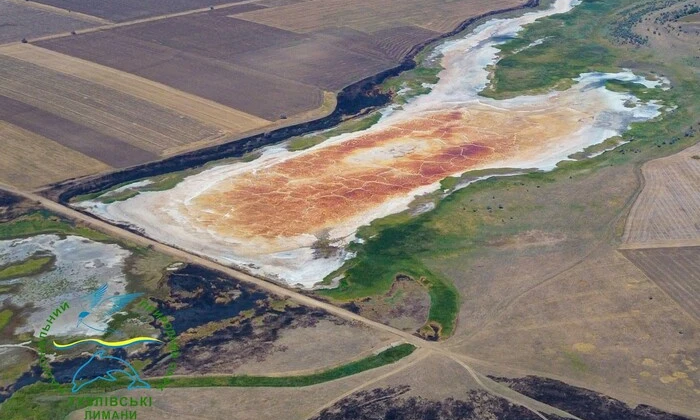
According to glavcom.ua: In the National Nature Park 'Tuzly Lagoons' in the Odesa region, the consequences of global warming are becoming evident - water bodies are drying up. This was reported by Doctor of Biological Sciences Ivan Rusev, an employee of the park.
According to Rusev, the reserve is named after the word 'tuz', which means 'salt' in the Turkic language. During the regression of the Black Sea, the water receded far away, the sea level fell, and the lagoons dried up, creating salt.
'Some water bodies in the park that depend on runoff from the mainland have dried up for the first time in many years due to the hot summer. We observe how all the small rivers and streams that flow into the lagoons are drying up. The evaporation is lowering the level of the large Tuzly Lagoons,' explains the scientist.
Rusev published photos of the reservoir and the Maloshaganske lagoon near the village of Vyshneve. 'Salt instead of water,' the scientist emphasizes. Climate change may impact the world's oceans, which are a very volatile substance. Such phenomena are classified as transgression and regression.
In this regard, it is worth noting that the southern regions of Ukraine are undergoing serious climate changes that pose a significant challenge for the agricultural sector.
Danger to Agriculture: Global Warming and Ukrainian Vegetables
Candidate of Geographical Sciences Vira Balabukh from the Ukrainian Hydrometeorological Institute of NAS of Ukraine notes that global warming threatens the cultivation of such traditional vegetables as potatoes, cabbage, and cucumbers due to changing climatic conditions.
Vira Balabukh's comments emphasize not only the consequences of global warming in the National Nature Park 'Tuzly Lagoons' but also the threats facing Ukrainian agriculture due to climate change.

Read also