Discovery of the Australian Warship HMCS Spitfire Wreck off North Queensland in 2026

Unearthing the HMCS Spitfire Wreck
According to НВ — Техно: In 2026, the remains of the Australian naval vessel HMCS Spitfire were uncovered near the coast of North Queensland. This ship sank on August 20, 1898, and holds historical significance as the first military vessel constructed in Australia in 1855. Originally designed for coastal patrols and supply delivery, the ship’s discovery was made by a team of archaeologists collaborating with the Australian National Maritime Museum and Queensland’s Department of Environment and Science.
The HMCS Spitfire was launched in Sydney’s Darling Harbour and was notable for being Australia's first wooden warship. Although it was unarmed, the ship played a vital role in patrolling and supplying lighthouses along the New South Wales coast. Later, it was reassigned to Queensland, serving as a pilot boat before being sold for use as a fishing vessel. On August 20, 1898, amid a severe storm near the Lockhart River, the ship sank. Remarkably, all crew members-comprising mainly Aboriginal Australians, Torres Strait Islanders, and South Pacific islanders-survived thanks to rescue by the Japanese steamship Omi Maru.
Exploration and Findings
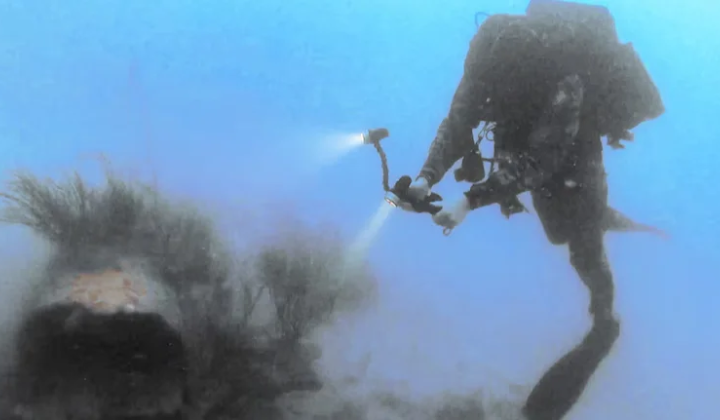
The search for the Spitfire began in 2026, culminating in the ship’s discovery on August 21, exactly 128 years after it went down. An official announcement followed in November of the same year. Navy divers were able to measure key parts of the wreck, including the bow and a small boiler. James Hunter, a lead researcher, commented:
"Most of the sunken ship remains buried beneath the seabed, but divers successfully measured distinctive features such as the bow and a small boiler." James Hunter
The archaeological team plans to return to the site in 2027 for more in-depth study.
Hunter also explained the cause of the sinking:
"On August 20, 1898, a storm struck. The vessel was already quite old at that time, which caused some planks to separate, leading to its sinking." James Hunter
It’s important to note that during this period, the Crimean War was ongoing between Great Britain and the Russian Empire, generating fears of a potential Russian invasion of Australia and the seizure of its colonies. "Concerns arose because there was anxiety that the Russians might attempt to invade Australia and capture the colonies," Hunter added.
The discovery of HMCS Spitfire’s wreck opens new avenues for exploring Australia’s maritime heritage and offers valuable insight into how natural disasters impacted naval operations in the 19th century. Studying such historic shipwrecks is crucial for preserving cultural heritage and provides a foundation for future archaeological investigations in the region.

Read also