Massive Wildfire in Chernobyl Exclusion Zone Being Fought After Russian Attack

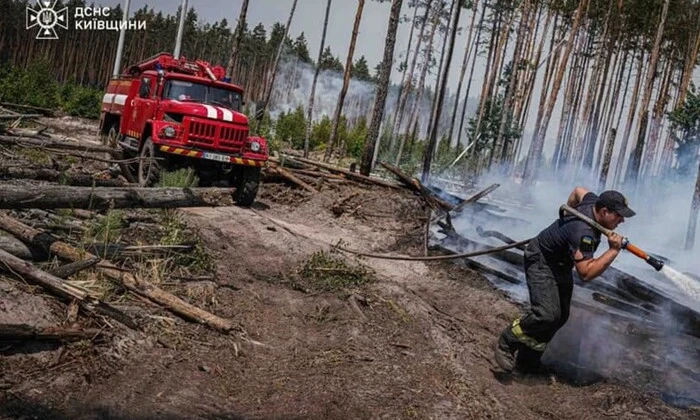
Firefighting Efforts in the Chernobyl Zone
According to Главком: Over 200 emergency responders and around 60 pieces of specialized equipment have been deployed to battle a large forest fire inside the Chernobyl Exclusion Zone. Firefighters, including personnel from the DPS 'Pivnichna Pushcha' fire protection service, are working intensively to extinguish the flames. In some hotspots, temperatures have reached approximately 50°C. Radiation levels at the work sites are being continuously monitored, and according to the State Emergency Service of Ukraine (DSNS), they currently remain within normal limits.
Earlier, on May 13, a separate fire in the Chernobyl Reserve-which had broken out on May 8-was fully extinguished. That blaze had spread across 1,200 hectares. It was contained on May 10 and finally put out by the evening of May 12. Rescuers also doused isolated peat smoldering areas covering about 2 hectares.
Military Strike and Its Consequences
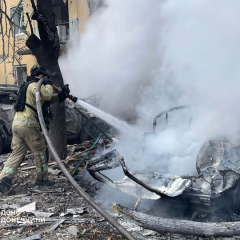
During the night of May 14, Russian forces launched a massive combined strike on Kyiv using ballistic missiles and drones. The attack targeted the Shevchenkivskyi, Pecherskyi, Darnytskyi, Dniprovskyi, Obolonskyi, Solomyanskyi, Desnyanskyi, Sviatoshynskyi, and Holosiivskyi districts. As a result of drone strikes involving Geran-2 unmanned aerial vehicles, fires broke out within the Opachychi and Korohodskyi forestry subdivisions of the Chernobyl Reserve. As of May 15, some of those blazes had already been extinguished.
The situation in the Chernobyl Exclusion Zone remains tense due to the impact of external military actions on fire safety. Containing fires in such ecologically sensitive areas is critical, as they could threaten not only the local environment but also the region's radiation security. Continuous radiation monitoring is a key part of the response, since any uncontrolled burning could increase the risk of contamination. The ongoing events highlight the importance of coordinated emergency services during crises.
The ongoing military actions have not only impacted the Chernobyl Exclusion Zone but have also led to significant environmental damage elsewhere. For instance, recent Russian strikes have resulted in the destruction of 25 hectares in the Drevlyansky Nature Reserve located in the Zhytomyr region. Such incidents highlight the broader implications of military aggression on Ukraine's natural reserves and the urgent need for protective measures. To learn more about the devastation in the Drevlyansky Reserve, read our detailed report here.

Read also