Remains of a Hundred Years War Fortress Discovered by French Archaeologists

Medieval Defensive Works
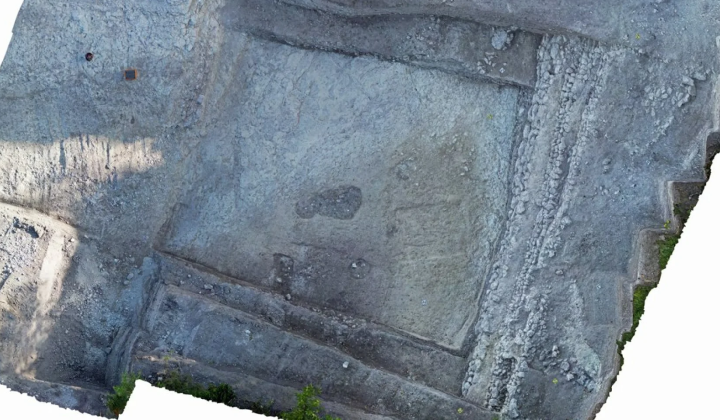
According to НВ — Техно: In southwestern France, archaeologists have uncovered remains of a fortress dating to the Hundred Years War. The team from the French National Institute for Preventive Archaeological Research (Inrap), excavating in Saint-Georges-de-Didonne, found both the medieval stronghold and a settlement that grew up around it. The work, taking place on a 6,475-square-meter site, is being conducted before construction of social housing. The Hundred Years' War, a long-running conflict between England and France, spurred the building of numerous fortifications like this one across the region.
The excavation is centered on the massive moats of the former castle of Didonne, documented in historical sources since at least the 11th century. This castle held strategic importance during the Hundred Years War, and today its presence is confirmed by the local place name Le Châtât and a series of ditches. The inner moat measures almost 15 meters across and at least 6.5 meters deep. Along its inner bank, archaeologists identified a fortified stone rampart at least 10 meters wide, supported by a stepped stone embankment no less than 5 meters high. This defensive structure was built no later than the 12th century.
A strip of land about 10 meters wide separates the inner and outer moats. The outer moat is roughly 15 meters wide and around 2.7 meters deep. Both drainage channels lead into the Rivaud valley. A prior archaeological assessment of the plot, carried out in 2012, laid the groundwork for today's dig.
Excavations and Discoveries
Artifacts and features found at the site include underground vaults, postholes, smaller ditches, and at least two wells. Evidence suggests the hillside at Didonne was already settled during the Carolingian period. Notably, Inrap had earlier found the ruins of a 14th-century medieval castle beneath the Lagorce hotel in Brittany, which yielded jewelry, pots, frying pans, and padlocks.
These excavations represent a major step forward in studying France's medieval architecture and defensive systems, underlining how archaeological research helps safeguard cultural heritage. They also illustrate how modern building projects can go hand in hand with historical investigation, enabling the past to be explored without destroying the very sites that preserve it.

Read also