Over 50 Lead Textile Seals with Amsterdam Emblems Discovered in Tartu; Excavations to Continue Until 2027

Significant Archaeological Discoveries in Tartu
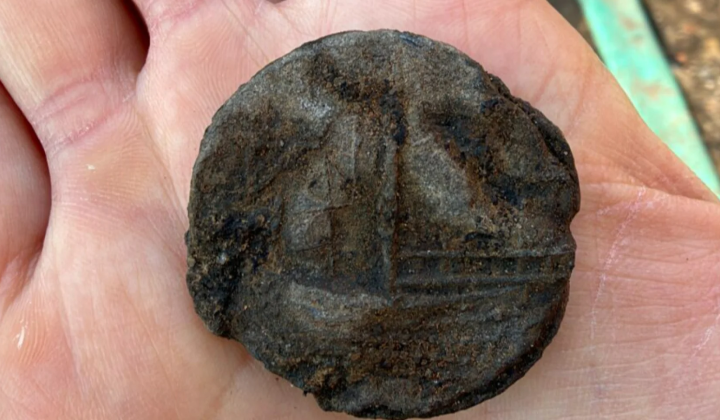
According to НВ — Техно: During ongoing excavations in Tartu, Estonia, archaeologists have uncovered more than 50 medieval lead seals used for fabric rolls, each bearing the emblem of Amsterdam. These artifacts date back to the 15th and 16th centuries, highlighting the city’s role in the vibrant textile trade as part of the Hanseatic League network. Excavations began in April 2026 and are planned to continue through the end of 2027, covering an area of approximately 10,500 square meters. These findings reinforce Tartu’s historical importance as a hub of medieval commerce.
Historical Context and Importance
The discovered seals, each measuring about 3.7 centimeters in diameter, served to verify the origin and quality of textiles. They feature imagery of a medieval cog ship, a common trading vessel, alongside Amsterdam’s coat of arms adorned with three St. Andrew’s crosses. The practice of affixing such seals originated in 12th-century Flanders and spread across Europe by the 13th century. This evidence points to Tartu’s active participation in the international fabric trade within the Hanseatic economic network.
The archaeological layers being examined reach depths of up to five meters below the current surface, allowing researchers to explore several historical periods. Archaeologist Arvi Haak remarked,
“These digs have already uncovered several times more lead textile seals than were previously known across the entire city.” – Arvi Haak
In a related discovery, Tallinn revealed a remarkably preserved 14th-century medieval cog ship in spring 2026. Measuring 24.5 meters long and 8.6 meters wide, the vessel was found intact in moist sand. Alongside it, what is likely Europe’s oldest dry compass was also unearthed, offering valuable insights into medieval trade navigation in the Baltic region.
Collectively, the excavations in Tartu and Tallinn deepen our understanding of Estonia’s medieval trade networks and economic life. The Tartu finds emphasize the city’s integral role within the Hanseatic League’s trading system, reflecting its economic vitality and cultural connections across Europe. These ongoing archaeological projects provide fresh perspectives on medieval commerce, attracting interest not only from historians but a broad range of scholars. Together, these discoveries highlight the growing significance of archaeology in illuminating the historical development of the Baltic region.
The recent findings in Tartu echo the significant trade networks of the medieval period, much like the recent discovery of Arabic dirhams in Poland, which highlights the extensive Viking-era commerce at Truso. This connection underscores the interconnectedness of trade across Europe during these historical epochs, revealing how various regions influenced one another economically and culturally.

Read also