Discovery of Arabic Dirhams in Poland Highlights Extensive Viking-Era Trade Networks at Truso

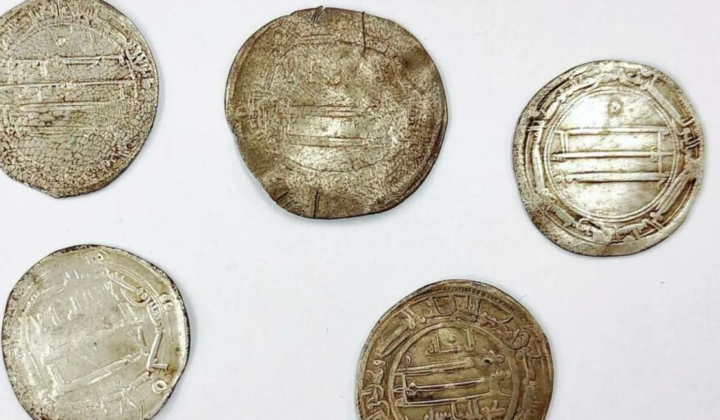
Findings at Młynarskie Forest
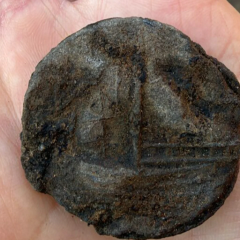
According to НВ — Техно: Near Elbląg in Poland’s Młynarskie forestry area, archaeologists uncovered six Arabic dirhams and two fragments of silver coins dating back to the early 9th century. These artifacts are linked to the Viking Age trading settlement of Truso, a key commercial hub in the Baltic region. This discovery provides compelling evidence of vast trade connections that linked the Baltic Sea area with the Islamic world over 1,100 years ago.
The Legacy of Truso
Situated on the shores of Lake Drużno, Truso was long considered a mythical city until its location was confirmed through archaeological excavations in 1981. The Archaeological and Historical Museum in Elbląg now houses the recovered coins for preservation and further study. These coins likely remained in use for centuries after their minting, possibly circulating until the late 10th or early 11th century.
For centuries, Truso's exact location was unknown, often compared to legendary sites like Troy or Atlantis. The search spanned nearly 400 years until Anglo-Saxon traveler Wulfstan documented his journey from Hedeby to Truso at the end of the 9th century-a narrative later published in 1598 by Richard Hakluyt. In 1981, archaeologist Marek Jagodziński discovered the settlement's remains near Janowo Pomorskie on Lake Drużno’s eastern shore. Excavations revealed its Scandinavian origin through finds such as dwellings, workshops, jewelry, weaponry, and religious artifacts.
Truso was part of the extensive Viking trade network alongside centers like Hedeby, Birka, and Staraya Ladoga. In the 9th century, Arabic silver coins from the Abbasid Caliphate were widely circulated across Northern and Eastern Europe, underscoring the far-reaching economic ties of the period.
This recent find underscores Truso’s vital role in facilitating trade and cultural exchange across regions. As Jakub Jagodziński noted,
“the coins may have remained in circulation long after their initial minting, potentially until the late 10th or early 11th century, coinciding with the decline of Truso’s activity.”
Adding to this narrative, in September 2026, Finland revealed the largest known hoard of Late Iron Age coins, shedding new light on trade routes of that era. Metal detectorist Kalle Lappinen first uncovered the treasure, which was then carefully excavated under the supervision of archaeologist Esko Tikkala.
Findings from Truso confirm the existence of sophisticated trading networks connecting northern and southern Europe during the Viking Age. The settlement was significant not only to Scandinavian traders but also to Arab merchants, facilitating important cultural and economic interactions that shaped the region’s development. Growing archaeological interest and discoveries like the Finnish coin hoard open fresh avenues to deepen our understanding of this pivotal chapter in European history.
This remarkable discovery at Truso is reminiscent of other significant archaeological finds across Europe, such as the recent hoard of Roman coins and a gold ring from Gotland. Both sites illustrate the rich tapestry of trade and cultural exchange that characterized ancient Europe, highlighting how interconnected these regions were even in antiquity.

Read also