LOFAR Telescope Captures Sharpest Low-Frequency Radio Sky Image, Detecting Nearly 63,000 Sources

Unprecedented Clarity in Low-Frequency Radio Astronomy
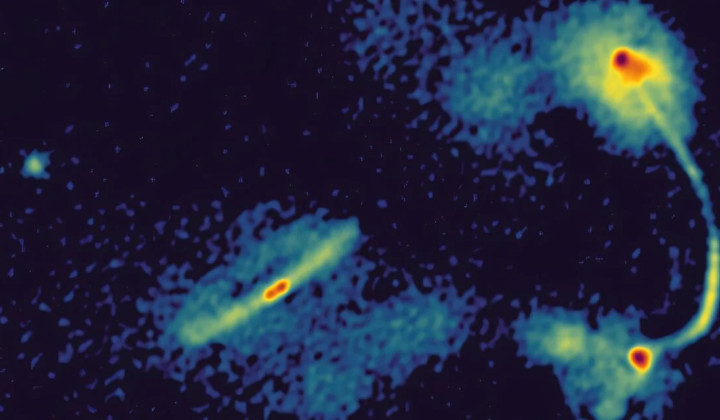
According to НВ — Техно: On November 8, 2023, an international team led by Leiden University unveiled the most detailed and sensitive low-frequency radio map of the sky to date, created using the LOFAR telescope. This breakthrough image reveals nearly 63,000 cosmic radio sources within the northern sky region known as ELAIS-N1, showcasing an unprecedented level of detail.
The LOFAR antenna array has produced a radio map with a resolution 20 times sharper than previous efforts. The final image comprises 8 billion pixels and is based on a massive dataset of 400 terabytes gathered over 200 hours of observation. Covering an area roughly 25 times the size of the full Moon, this extensive survey enables scientists to examine the intricate structure of radio jets and their role in shaping the surrounding cosmic environment.
Advancing Our Understanding of the Universe
This new radio image is so precise it could distinguish a coin from approximately 10 kilometers away. Data processing was performed on the powerful Spider supercomputer in the Netherlands. When combined with optical and X-ray observations, these results become a vital tool for studying colossal jets emitted by black holes as well as star formation processes in distant galaxies.
Looking ahead, researchers aim to upgrade the telescope to LOFAR2.0, ensuring Europe's continued leadership in radio astronomy. This development promises to open fresh avenues for astrophysical research and deepen our comprehension of cosmic phenomena.
The exceptional detail and vast data volume of this radio image offer unique opportunities to explore previously inaccessible radio sources. This advancement allows scientists to gain deeper insights into galactic dynamics and interactions between black holes and their environments. The planned LOFAR2.0 enhancement is expected to significantly elevate the capabilities of European radio astronomy, marking a major milestone in the field.
The advancements in radio astronomy highlighted by the LOFAR telescope's recent findings not only enhance our understanding of cosmic structures but also relate to ongoing research in high-energy astrophysics. For instance, recent studies have established a connection between high-energy neutrinos and cosmic radio bursts, suggesting that the universe's most energetic phenomena may be intertwined. This correlation could further illuminate the processes behind the cosmic events captured in the new LOFAR images.

Read also