Hidden magnetic shifts inside the nucleus are the key to a puzzling gamma-radiation mystery

A nuclear puzzle now has a clear answer
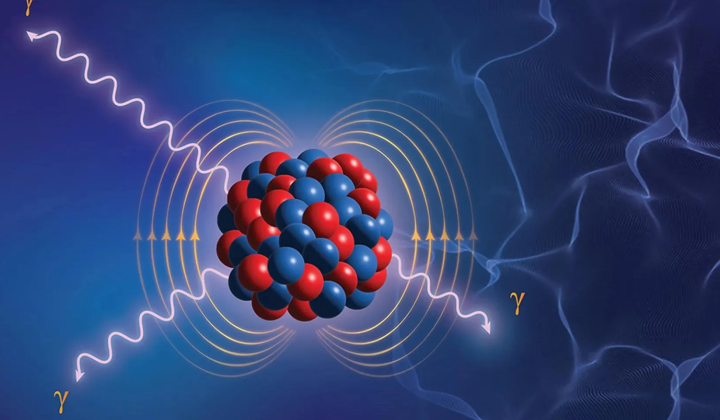
According to НВ — Техно: Gamma-ray spectroscopy is a standard tool for probing nuclear structure, but some observed low-energy intensities have defied theoretical expectations. Now, researchers from the Facility for Rare Isotope Beams (FRIB) and Lawrence Livermore National Laboratory (LLNL) have identified why: magnetic transitions taking place inside the nucleus. The team studied the radioactive decay of a copper isotope into zinc using FRIB's instrumentation and found that a magnetic transition triggers a sharp increase in gamma-ray output, shedding new light on nuclear behavior.
What this means for nuclear science
The core puzzle was that certain atomic nuclei release more low-energy gamma rays than existing models predicted-a pattern known as low-energy emission enhancement. The new data show that this enhancement is linked to a magnetic transition in which neutrons and protons reorient their intrinsic magnetic moments, modifying the emitted radiation. FRIB's capability allowed the scientists to separate two distinct decay states: one driven by an electric transition, where protons alter their spatial distribution, and another driven by the magnetic transition that explains the anomalous low-energy gamma-ray increase.
The findings appear in the journal Nature under DOI 10.1038/s41586-026-10758-3. They are expected to improve nuclear models used to simulate stellar interiors, supernova explosions, and neutron-star mergers. Potential applications also include:
- civilian nuclear power,
- national security systems,
- nuclear forensics,
- assessment of specialized materials.
By revealing fresh details about how atomic nuclei behave during radioactive decay, this work could have a broad impact on nuclear physics. The newly established link between magnetism and gamma radiation opens promising avenues for both theoretical and experimental research, making the discovery relevant for fields as varied as astronomy and nuclear power.
As researchers delve deeper into the nuances of nuclear behavior, it's fascinating to consider how similar principles might apply in other materials. For instance, the intriguing phenomenon of mechanical manipulation altering electronic properties in manganese telluride highlights the complex interplay between physical forces and material responses. Such studies could pave the way for advancements in technology and our understanding of fundamental physics.

Read also