Types of safety training: classification and procedure for implementation


Organizing safe working conditions is one of the key responsibilities of the employer. For employees to perform their duties without risk to life and health, a training system on safety issues is implemented at enterprises. That is why the types of safety training are very important as a topic for study at the enterprise.
In general, the types of safety training are extremely diverse (it is important to understand separately what types of safety training exist and what types of safety training are for specific enterprises in their work).
What is safety training and its significance
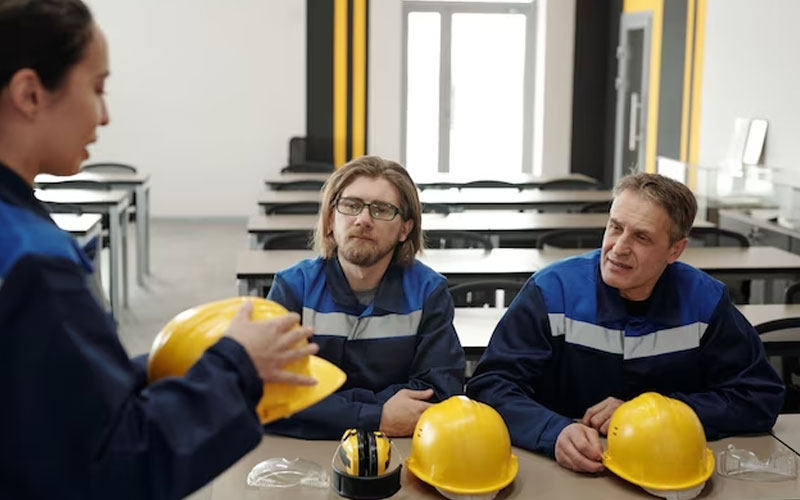
Safety training is a form of training for employees in safe behavior rules during the performance of labor duties. Its main goal is to familiarize employees with the safety requirements in force at the enterprise, as well as with the rules for using equipment, tools, and personal protective equipment.
One of the most important elements of this system is conducting training sessions, during which employees are explained the principles of safe work, the order of equipment use, and actions in case of dangerous situations. Therefore, the types and procedures for conducting safety training are appropriate to the enterprise's work.
Safety training is conducted in all enterprises regardless of ownership form or type of activity. They are mandatory for all employees, including newly hired employees, temporary workers, interns, and individuals performing work under contracts. Properly conducted safety training helps reduce workplace injuries and prevent accidents.
The system of safety training includes several different types, each of which has its own purpose and procedure. They differ in terms of when they are conducted, based on what reasons and the content of the training. Adhering to established rules for organizing training is an important part of personnel and production work at the enterprise.
During training, employees are explained the possible hazardous factors in the workplace, procedures to follow in case of emergency situations, fire safety rules, and other important requirements. This training helps to foster a responsible attitude towards one’s own safety and the safety of colleagues.
The importance of safety training lies in the fact that it allows one to prevent many dangerous situations. Even experienced employees may not be aware of the specifics of work at a new enterprise or the rules for using specific equipment. This is why conducting safety training is a mandatory step in organizing work.
Moreover, training has legal significance. In the event of an accident at work, the employer must confirm that the employee was familiarized with safety rules. To do this, training registration journals and other documents are used to confirm the fact of training completion.
Main types of safety training
The safety training system includes several types of training. They differ depending on the situation in which they are conducted and the category of employees undergoing training.

The main types of training include introductory, initial at the workplace, repeated, unplanned, and targeted. Each of them performs a separate function in the safety system.
The introductory training is conducted for new employees before they begin work. Its goal is to introduce a person to the general safety rules in force at the enterprise. The initial training takes place directly at the workplace and pertains to specific working conditions.
The repeated training is conducted periodically to prevent employees from forgetting safety requirements and maintaining a proper level of knowledge. Unplanned training is organized in cases of changes in the production process or after emergencies. Targeted training is conducted before performing one-time or especially hazardous work.
This system allows for constant monitoring of compliance with safety rules and enhances the level of safety at the enterprise.
Introductory training: when and how it is conducted
Introductory training is the first stage of familiarizing employees with the safety rules at the enterprise. All newly hired employees undergo this training regardless of position, work experience, or type of employment relations.
Such training is usually conducted by a safety specialist or another responsible person. During this training, employees are explained the basic principles of safe behavior on the enterprise's territory, fire safety requirements, procedures to follow in case of emergencies, and rules for using personal protective equipment.
Employees are also familiarized with the general structure of the enterprise, the layout of main production premises, evacuation exits, and medical points. All this helps the new employee adapt more quickly to the working conditions.

After the completion of the introductory training, a corresponding entry is made in the training registration journal. The employee confirms the completion of training with their signature.
Initial training at the workplace: features and procedure
Initial training is conducted directly before starting work at a specific workplace. It is conducted by the department head or another responsible person who is well aware of the specifics of the production process.
During this training, employees are explained the rules for working with equipment, procedures for using tools, safe work requirements, and possible hazardous factors. Special attention is paid to the rules for operating equipment and actions in case of emergencies.
Initial training is conducted not only for new employees but also for those who are transferred to another position or begin to perform new duties. This ensures safety even in cases of changing working conditions.
After the training, the employee confirms their familiarization with safety rules by signing in the journal.
Repeated training: purpose and frequency
Repeated training is conducted to update employees’ knowledge regarding safety rules. Even if a person has worked at the enterprise for a long time, over time they may forget certain safety requirements or become less attentive to them.
This is why legislation requires the periodic conduct of repeated training. They help remind employees of safe work rules and prevent possible violations.
Usually, repeated training is conducted at a certain frequency, which depends on the nature of the work. In high-risk jobs, it can be conducted more frequently to maintain a high level of safety.
During the training, employees are again explained the main safety rules, typical mistakes are discussed, and possible hazardous situations are analyzed.
Unplanned training: reasons and procedure

Unplanned training is conducted when there is a need to additionally familiarize employees with new safety requirements. Its conduct may be related to various circumstances.
One of the reasons may be a change in the technological process or the introduction of new equipment. In such cases, employees need to familiarize themselves with the new work rules and safety measures.
Unplanned training is also conducted after accidents, incidents, or violations of safety regulations. Its purpose is to analyze the situation and prevent similar incidents in the future.
Sometimes unplanned training is organized after a long break in work. This helps employees refresh their knowledge of safety rules before returning to their duties.
Targeted training: when it is needed
Targeted training is conducted before performing specific tasks that have a special nature or are associated with an increased level of danger. Usually, these are one-time tasks that do not fall within the employee's normal duties.
This training may be conducted before performing work at height, eliminating the consequences of accidents, conducting repair work, or organizing mass events. Its main goal is to explain to employees the specifics of performing a specific task and safety measures.
During targeted training, special attention is paid to specific risks and safe working rules. Employees must clearly understand their duties and the procedures to follow in case of a dangerous situation.
The fact of conducting such training is also recorded in the relevant documents.
Requirements for maintaining a journal and documenting training
All safety training must be properly documented. For this purpose, special training registration journals are maintained at enterprises, in which the date of training, type of training, employee's surname, and other necessary data are recorded.
The journal usually contains information about the person who conducted the training, as well as the employee's signature confirming the completion of training. Such documentation is an important proof of the employer’s compliance with legal requirements for ensuring safety at work.
Maintaining journals must be done accurately and without corrections. All entries must be clear and understandable, and the journal pages are usually numbered and bound.
Storage of documents confirming the conduct of training is an important part of the workplace safety system. They may be used during inspections or investigations of accidents, thus proper documentation management is of great significance for the enterprise.
Rights and responsibilities of employees during training
During the conduct of safety training, employees have not only an obligation to undergo training, but also certain rights that guarantee them safe working conditions and access to necessary information. Training should not be a formal procedure, as its main goal is to ensure a real understanding of safety rules and prevent possible accidents at work.
One of the main rights of an employee is the right to receive complete and understandable information about working conditions and possible hazardous factors in the workplace. During training, employees should be familiarized with the rules for using equipment, the procedures to follow in case of emergencies, and personal protective equipment. All explanations should be accessible for understanding, regardless of the employee's experience or level of training.
Employees also have the right to ask questions and receive clarifications regarding safety rules. If certain requirements or instructions remain unclear, the responsible person should explain them in more detail. Such an approach helps avoid mistakes during work and fosters a responsible attitude toward workplace safety.
An important right of an employee is the possibility to refuse to perform work if it poses a threat to life or health. In such a case, the employee can inform the supervisor or responsible person about the hazardous situation. This is why, during training, employees are explained the procedures for reporting unsafe working conditions.
Along with rights, employees also have certain responsibilities. First and foremost, they must attentively listen to the information during training and comply with all safety work requirements. After the training, the employee confirms their completion with their signature in the training registration journal.
Among the employee's responsibilities is also to adhere to the instructions received during work. This means using personal protective equipment, proper equipment operation, and following established safety rules. Violating these requirements may lead to dangerous situations or even disciplinary action.
Employees must immediately report to management any hazardous situations, equipment malfunctions, or incidents of injury. Such information allows prompt responses to possible risks and prevents the recurrence of dangerous situations in the future.
Another important responsibility is to undergo repeated or unplanned training within the specified time frames. Even if an employee has significant experience, regularly updating knowledge helps maintain a high level of safety at work.
Thus, participation in training is an important part of the safety system. It combines the right to receive information about safety and the obligation to adhere to established rules during the performance of labor duties.
Common mistakes during the conduct of training
Despite clear requirements for organizing safety training, mistakes sometimes occur in practice that undermine the effectiveness of training and may lead to issues during inspections or investigations of accidents. Most often, such mistakes arise from a formal attitude towards conducting training or insufficient attention to documentation.
One of the most common problems is the formal conduct of training without a real explanation of safety rules. In some cases, employees are merely asked to sign the journal without receiving thorough training. This approach contradicts the main purpose of the training, as employees may be unaware of important safety requirements.
Another common mistake is the lack of an individual approach to training. All workplaces have their characteristics and potential risks. If training is conducted uniformly for all employees without considering the specifics of their duties, important information may be overlooked.

A problem also arises from incorrect maintenance of training registration journals. Sometimes entries are made late or lack necessary information. There may be missing signatures from employees, dates of training, or the name of the person who conducted it. Such deficiencies may raise issues during inspections.
Another typical mistake is the failure to adhere to the established frequency of repeated training. If employees do not undergo training within specified timelines, this may indicate violations of workplace safety regulations at the enterprise.
Sometimes training is conducted by individuals who do not possess the necessary knowledge or have not undergone the required training. As a result, employees may receive incomplete or inaccurate information regarding safety rules.
Situations also arise where unplanned training is not conducted after changes in the production process or after the occurrence of dangerous situations. This can lead to the recurrence of the same mistakes in work and increases the risk of accidents.
To avoid such mistakes, enterprises must pay sufficient attention to organizing training, regularly monitor documentation management, and ensure quality training for employees. A well-organized training system is a crucial component of safe work and helps foster a responsible attitude toward workplace safety among personnel.

Read also