Earth Could Have Maintained a Habitable Climate for 5 Billion Years Without Photosynthesis, Study Finds

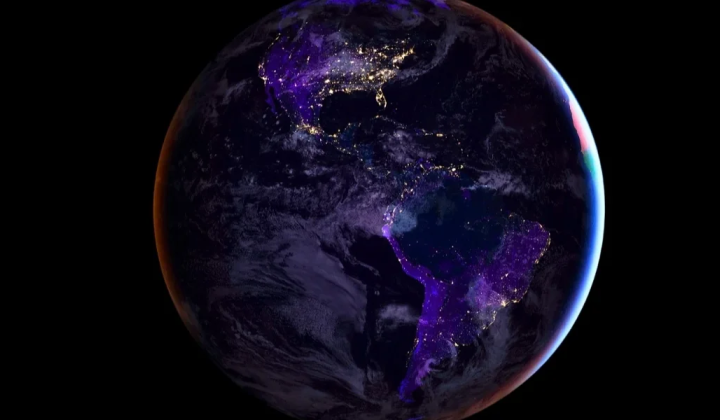
Exploring Earth's Evolution in the Absence of Life
According to НВ — Техно: An international team of scientists has simulated Earth’s development without the emergence of life, revealing that the planet could have sustained a climate suitable for life over billions of years solely through the carbonate-silicate cycle, even without biological activity. This groundbreaking research, published in The Planetary Science Journal, was led by astrobiologist Samantha Gilbert-Yanizek from the University of Washington.
The researchers incorporated factors such as Earth's core, mantle, crust, atmosphere, oceans, and solar radiation, evaluating 19 essential parameters including surface temperature, ocean chemistry, and heat flow. Their simulation spanned the full 5 billion-year timeline-from Earth's formation up to roughly 500 million years into the future. During this period, solar brightness increased by about 30%, a critical factor in their analysis.
The Crucial Role of the Carbonate-Silicate Cycle
Central to their model was the carbonate-silicate cycle, involving chemical weathering of rocks, volcanic gas emissions, and interactions between the oceans and atmosphere. Results indicated that without photosynthesis, Earth's atmosphere would have been nearly oxygen-free, yet the amount of water and overall climate conditions might have resembled those we experience today.
“Our goal was to determine whether a rocky planet could independently sustain the conditions necessary for liquid water without relying on living organisms.”
- Samantha Gilbert-Yanizek
While this work does not disprove the Gaia hypothesis-which emphasizes life’s feedback on Earth’s environment-it demonstrates that biological processes are not strictly required for maintaining Earth’s long-term habitability. Moreover, the model offers valuable insights for astronomers studying exoplanets, helping distinguish between signs of life and purely geological phenomena.
The findings highlight the fundamental importance of geological cycles in stabilizing planetary climates, a concept that extends beyond our Solar System. This research opens new avenues for identifying life-supporting conditions on exoplanets where environments could mirror Earth’s early stages before biological activity began.
This research opens new avenues for understanding planetary habitability, particularly in the context of exoplanets. By examining a lifeless Earth model, scientists aim to differentiate biological signatures on distant worlds. Such insights could significantly enhance our search for extraterrestrial life and the conditions that support it.

Read also