Innovative Self-Healing Hydrogel Developed by U.S. Scientists Offers Full Recyclability

Applications from Contact Lenses to Diapers
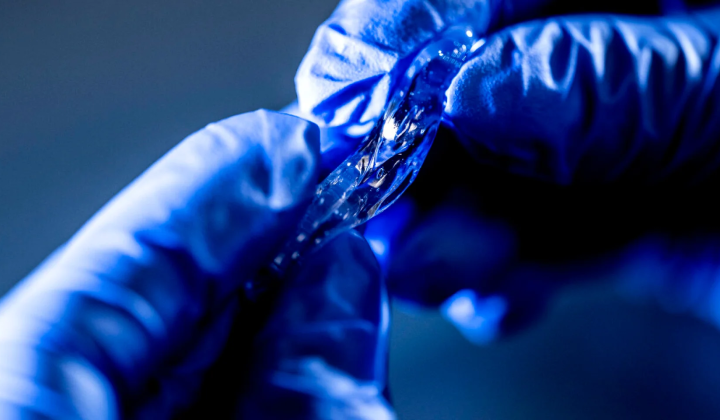
According to НВ — Техно: Researchers at Northeastern University have engineered an advanced hydrogel capable of repairing itself and undergoing complete secondary recycling. Their findings, published in the journal Advanced Materials, describe how the material replaces permanent bonds with reversible imine-boronate ester linkages, allowing the polymer network to be disassembled and the original substance to be regenerated.
Exceptional Features of the New Hydrogel
This hydrogel maintains a high water content through an intricate network of long molecular chains. Unlike traditional hydrogels that rely on permanent connections and are challenging to recycle, this novel material can self-heal within approximately 15 minutes after sustaining damage. Experimental tests demonstrated that severed sections of the hydrogel naturally reattached and sealed cuts, highlighting its remarkable restorative abilities.
The dynamic breaking and reforming of polymer bonds, driven by acidity control and the presence of water, opens up diverse possibilities for this hydrogel in:
- eco-friendly medical products
- contact lenses
- hygiene items
- drug delivery systems
Moreover, recycled versions of the hydrogel sometimes exhibit enhanced properties compared to the original. Since repairing or replacing such products is often costly or impractical due to complexity, this innovation could significantly improve sustainability and economic feasibility in material use.
The creation of a durable, self-healing hydrogel marks a major breakthrough in materials science by providing environmentally sustainable solutions across a wide range of applications.
Given the rising demands for sustainable materials and waste reduction, this hydrogel represents a promising advancement for manufacturing medical devices and everyday products that typically require frequent repairs or replacement. Its adoption could contribute to reducing waste volumes and lowering the consumption of new resources, positively impacting environmental conservation efforts.
In addition to innovations in hydrogels, advancements in sustainable materials are also being made in the construction sector. A recent study highlights how a plasma technology significantly accelerates cement production, reducing the time required by a factor of 100. This breakthrough not only enhances efficiency but also aligns with the growing demand for eco-friendly building materials.

Read also