Anomalous Snow in Atacama Halts Operations of ALMA Telescope

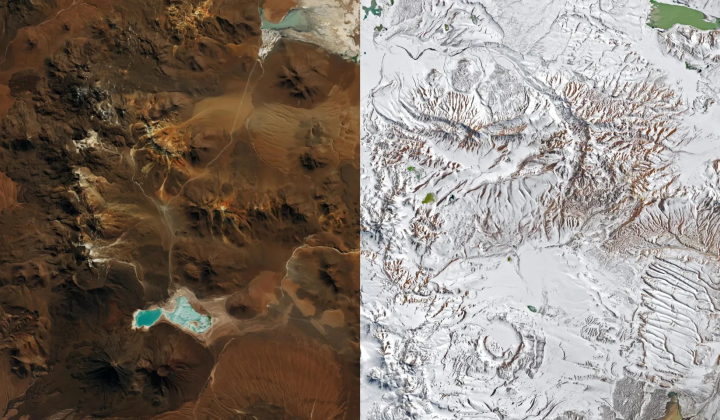
True Snowstorm. Anomalous Precipitation Hits Atacama Desert
According to НВ — Техно: In August 2026, the northern part of Chile was at the epicenter of a series of winter storms that brought anomalous snowfall to the Atacama Desert. NASA satellites captured snow on the Chajnantor plateau, completely covering it within the Altiplano-Puna volcanic complex. This event, which occurred for the first time since similar snow phenomena in 2011 and 2025, triggered significant environmental changes recorded by NASA Landsat 8, Landsat 9, and Terra.
The snow front covered the area from the high Andes to the Pacific coast. Due to the snowfalls and strong winds, operations of the Atacama Large Millimeter Array (ALMA) were temporarily halted, with its antennas switched to protective mode. Other astronomical observatories south of the port city of Antofagasta also took precautionary measures due to the bad weather.
Causes and Consequences of the Anomaly
The cause of the anomaly has been attributed to a low-pressure system extending from the southern tip of South America to the subtropics. Atmospheric specialists from the University of Chile link such cataclysms to the influence of the El Niño climate phenomenon, during which the subtropical Pacific anticyclone weakens and the storm trajectory shifts closer to the equator.
In the coastal town of Taltal, about 40 millimeters of rain fell in three days, which is approximately ten times the annual average for this region. The consequences of the bad weather included landslides and sudden floods that damaged hundreds of homes in northern Chile.
The snowstorms in August 2026 changed the landscape of the Chilean Atacama Desert, leaving numerous traces of destruction and ecological changes. Publication time of the article: 01.09.2026.
This event underscores the growing impact of climate change on extreme weather phenomena in regions that previously experienced no such cataclysms.
Anomalous precipitation in the Atacama Desert not only harmed infrastructure but also caused serious ecological consequences that require careful monitoring and analysis. Studying the causes of such phenomena may be key to understanding climate changes and their impacts on various regions of the world.

Read also