Detecting Exoplanets Through Gravitational Waves: NASA and ESA's LISA Mission Set for the 2030s

Innovative Technique for Finding Exoplanets
According to НВ — Техно: NASA and the European Space Agency (ESA) have unveiled a pioneering approach to discovering exoplanets using gravitational wave detection, set to be implemented by the upcoming LISA observatory. Scheduled for launch in the mid-2030s, LISA will focus on identifying exoplanets orbiting double white dwarf systems throughout our Galaxy. This method will complement the data currently gathered by NASA's James Webb Space Telescope, broadening our ability to explore distant worlds.
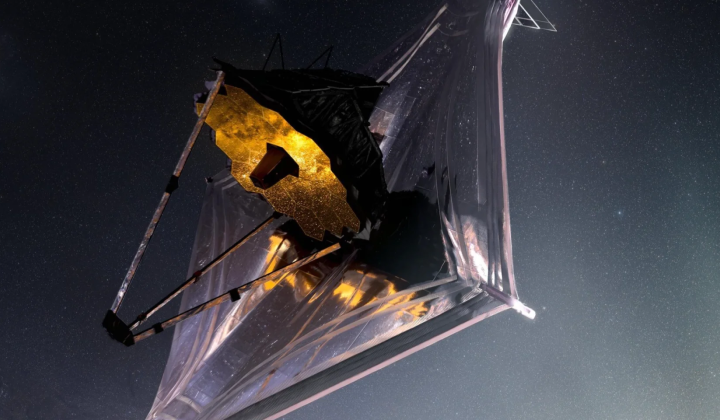
The James Webb Space Telescope specializes in spotting exoplanets that might harbor conditions suitable for life by detecting their infrared signatures. Meanwhile, LISA aims to measure gravitational waves-a critical component of this new detection strategy. Within the Milky Way, there are roughly 10 million double white dwarf pairs with orbital periods under one hour, offering a rich field for study using this novel technique.
Key Features of the LISA Observatory
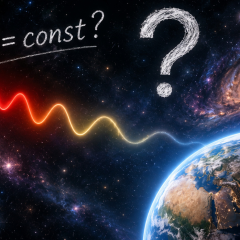
LISA will analyze at least 10,000 double white dwarf systems in detail. The exoplanet detection technique relies on the Doppler effect: the gravitational pull of an orbiting planet causes modulations and additional frequency sidebands in the gravitational wave signals emitted by these stellar pairs. Since gravitational waves travel at the speed of light and pass through matter, they provide unique observational advantages in astronomy.
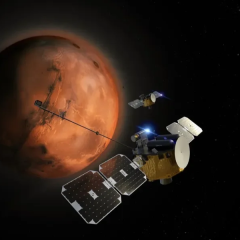
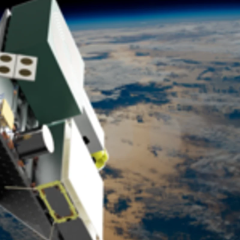
The LISA mission consists of three spacecraft flying in a triangular formation trailing Earth, with sides measuring 2.5 million kilometers. Using laser interferometry, these satellites will detect distance changes between them with precision finer than the size of a helium atom. Under optimal conditions, LISA could identify exoplanets with masses smaller than that of Jupiter.
In contrast, the James Webb Space Telescope can detect infrared emissions from planets located over 4.73 trillion kilometers away (more than 500 light-years) and distinguish planets up to five times the mass of Jupiter at similar distances. Together, LISA and James Webb are set to significantly enhance our understanding of exoplanets and their potential to support life.
Introducing gravitational wave detection into exoplanet research opens exciting new frontiers in astronomy and the search for extraterrestrial life. With its anticipated launch in the 2030s, LISA will augment existing technologies, strengthening efforts to study planetary systems beyond our own. The combined capabilities of LISA and the James Webb Space Telescope promise to drive important breakthroughs in characterizing distant worlds and assessing their habitability.
As the quest for understanding distant worlds continues, researchers are also exploring innovative methods to distinguish between biological and non-biological signals on exoplanets. By creating a lifeless Earth model, scientists aim to enhance the detection of potential signs of life. This approach complements the advancements made by the upcoming LISA mission, which will utilize gravitational waves for exoplanet discovery. To learn more about this intriguing research, check out how scientists are developing models to differentiate biological signals on exoplanets here.

Read also