Anti-Ukrainian Sentiments Rise After Elections in the Czech Republic: How Our Migrants Should React

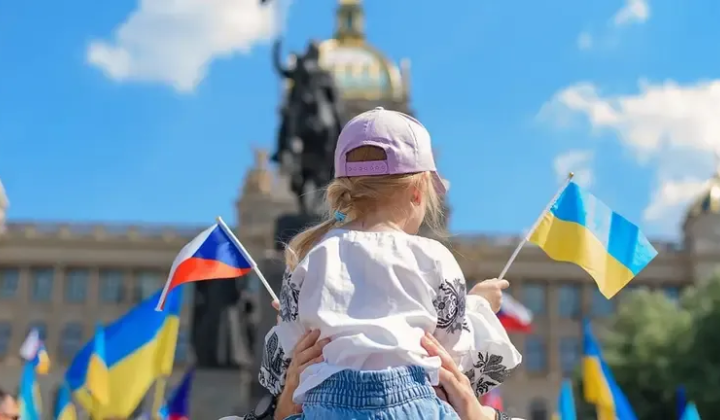
After the parliamentary elections in the Czech Republic, where Andriy Babiš's movement won, anti-Ukrainian statements have once again become active in the public space. A number of politicians claim that Ukrainians are allegedly taking jobs and burdening social systems. International employment expert Vasyl Voskoboynik explains that such messages do not reflect reality and are actively used by politicians in election rhetoric.
Anti-Ukrainian Sentiments in the Czech Republic After the Elections
One of the first steps of the new head of the Chamber of Deputies, Tomio Okamura, was to remove the Ukrainian flag from the facade of parliament. Okamura stated that Ukrainians are overloading social funds. However, incumbent Prime Minister Petr Fiala cited official statistics that refute these claims.
During the full-scale war, the Czech Republic:
-
spent over $4 billion to support Ukraine
-
meanwhile received $3.8 billion in taxes and insurance contributions from Ukrainians
-
additionally received about $1.1 billion in compensation from the EU.
Fiala emphasized that Prague earned more from migration than it spent. Similar conclusions are shown in the data from Poland.
Ukrainians in the Czech Republic: Who Are They and What Economic Impact Do They Have
Voskoboynik noted that Ukrainian refugees are active participants in the economies of EU countries:
-
they work and pay taxes
-
they rent housing
-
they use local services
-
they fill labor shortages.
According to a new UN study, Ukrainians contributed over 2.7% of GDP to the Polish economy, which is equivalent to more than $27 billion.
The expert noted that up to 70% of Ukrainians currently living in EU countries may not return. The reasons are:
-
children are studying in local schools
-
a new standard of living has formed
-
there are no guarantees of a quick economic recovery in Ukraine.
Before the war, migrants remitted $12–15 billion home each year. Now, with families leaving together, this flow is significantly reduced.
Voskoboynik emphasized that Ukraine is losing not only people but also the basis for rapid post-war development. To retain citizens, attractive conditions are needed: a predictable tax environment, business support, access to housing and jobs.
Earlier, we wrote that Ukrainian refugees are increasingly choosing the Czech Republic as a country for temporary residence. According to the country's Ministry of Internal Affairs, the number of issued temporary protection permits has significantly increased in recent months, reaching a record high.