Seven Massive Burial Urns Unearthed in the Amazon, Containing Human and Animal Remains

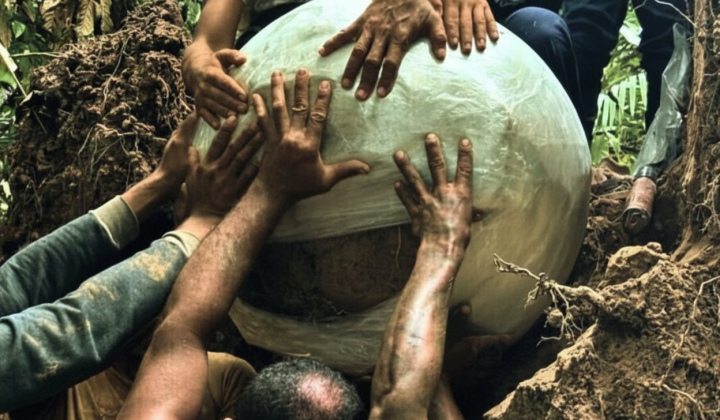
Archaeological Discovery in the Amazon
According to Главком: In the Amazonas state of Brazil, archaeologists have uncovered seven enormous ceramic urns. These vessels contain a mix of human remains alongside bones from animals, fish, and turtles. The discovery was made in the Lake Coçila area, where researchers noted the urns may have been crafted from a rare green clay. This find suggests the possible existence of a previously unknown population group in the region, challenging long-held assumptions about the Amazon's pre-Columbian history.
The urns were found embedded 3.2 meters up in a root system. Analysis indicates some fragments contain materials not native to the Lower Amazon, hinting at the unique nature of this archaeological culture. Dr. Jorgelia Leila Holland suggested that
“they were likely sealed with an organic material that has long since decomposed and were buried only about 40 centimeters deep-possibly beneath ancient houses.”
Significance of the Find
A local community supporting the archaeological work built a structure from trees and vines to assist the researchers. The islands near Lake Coçila are notably formed from earth and ceramic shards, underscoring the region's importance for understanding human history in the Amazon. This discovery indicates the area may have been inhabited earlier than previously thought.
This archaeological find has the potential to reshape our understanding of settlement history in the Amazon region. The unearthed urns not only demonstrate complex cultural practices but may also point to trade connections with other territories, broadening our view of ancient civilizations' socio-economic structures. Further research could lead to new discoveries and help clarify the chronology of human habitation in this part of the world.

Read also