Fifth Millennium BCE Europe Reveals Extensive Cultural Connections Beyond the Rhine

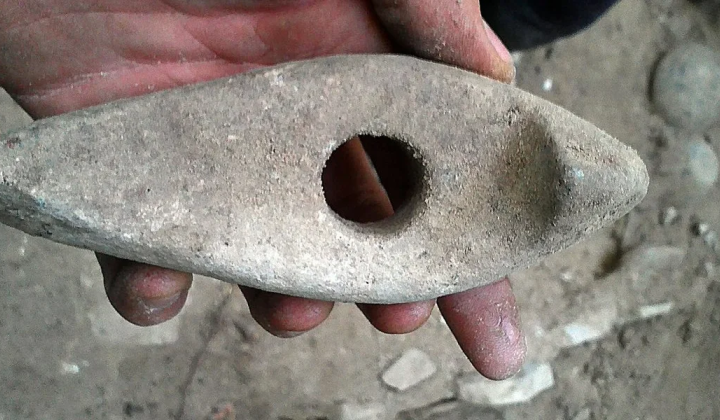
Uncovering Ancient Cultural Networks Across Europe
According to НВ — Техно: Researchers from Kiel University have uncovered compelling evidence of widespread cultural exchanges spanning Western, Central, and Northern Europe around 5000 years ago. Their findings challenge the long-held belief that the Rhine River served as a significant barrier between prehistoric communities. Instead, they demonstrate a shared cultural landscape marked by common traditions, artifacts, and beliefs during the Late Neolithic period. The study was published in the archaeological journal Germania.
This interdisciplinary research integrates data from three key archaeological sources:
- coarse pottery,
- double-edged stone axes,
- and large communal burial sites.
The coarse pottery, often referred to as 'rough ware,' first emerged in the middle of the 4th millennium BCE in present-day central and northern France, as well as the western Alpine region. Similar pottery styles appeared somewhat later in western and northern Germany and Denmark.
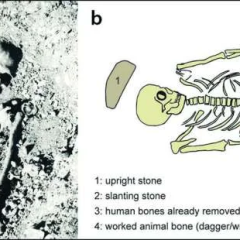
Double-edged stone axes featuring hafting holes have been found stretching from France through Central Europe up to Scandinavia and Poland. The French specimens date back to the 4th and early 3rd millennia BCE. Meanwhile, vast collective burial monuments-such as passage graves and gallery tombs-capable of holding dozens or even hundreds of individuals, were in use for multiple generations. These burial sites also functioned as venues for ceremonial events and community gatherings.
The research reveals that the Rhine did not act as a strict cultural divide during the Late Neolithic. Instead, people, ideas, and material traditions regularly crossed this river within extensive cultural networks. Co-author Sebastian Schultrich emphasized:
“Our findings illustrate a communication network extending from France and the Alpine region through Germany and Denmark all the way to Scandinavia and Poland at the end of the 4th and beginning of the 3rd millennium BCE.” – Sebastian Schultrich
He further explained that the gradual and unconscious blending of pottery styles over vast distances suggests deep-rooted cultural connections. Schultrich highlighted that what emerges from this evidence is a network characterized by overarching shared narratives, while still allowing for distinct regional features.
Significance of the Discovery
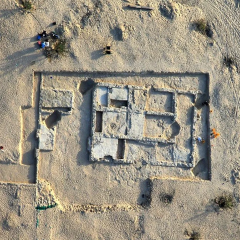
This study sheds new light on the complex social frameworks and cultural interactions among prehistoric European communities. Excavations at Riparo Mochi, near the French-Italian border, support these conclusions, revealing an intact ancient hearth, marine shells, grinding stones, and domestic tools.
Understanding these cultural ties is crucial, as they demonstrate that prehistoric societies maintained dynamic relationships despite natural geographic obstacles. The insights gained here have the potential to influence future archaeological research, particularly regarding migration patterns and the formation of cultural identities in early societies. Moreover, such discoveries contribute valuable perspectives for interpreting the cultural relationships that continue to shape Europe today.
The exploration of ancient cultural ties across Europe reveals intriguing parallels with other archaeological discoveries. For instance, recent findings in Alsace shed light on 5th-century graves adorned with gold and horse burials, highlighting the rich burial practices of that era. These insights not only enrich our understanding of cultural exchange but also emphasize the interconnectedness of societies across different periods. To learn more about these fascinating discoveries, visit the recent excavation in Alsace.

Read also