Jordan’s Ubeidiya Site Reveals Human Presence Outside Africa Nearly 2 Million Years Ago, Challenging Previous Timelines

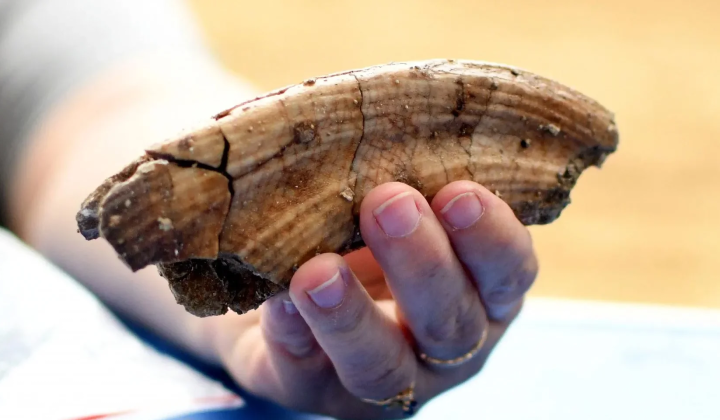
Unearthing the Ubeidiya Archaeological Site
According to НВ — Техно: Located in the Jordan River Valley, the Ubeidiya site has been dated to at least 1.9 million years ago. This groundbreaking discovery significantly pushes back the timeline for the earliest Homo species living beyond Africa by hundreds of thousands of years. An international team of researchers led by Professor Aryeh Matmon from the Hebrew University of Jerusalem, Professor Omri Barzilai from the University of Haifa, and Professor Miriam Belmaker from the University of Tulsa has confirmed Ubeidiya as one of the oldest known hubs of early human activity outside the African continent.
Distinct Tool Traditions and Dating Techniques
Previous estimates placed the arrival of early Homo in this region between 1.2 and 1.6 million years ago. Ubeidiya’s age aligns it with the Dmanisi site in Georgia, which features simpler Oldowan stone tools. In contrast, Ubeidiya has yielded Acheulean-style hand axes, reflecting more advanced craftsmanship. This suggests that early humans employed diverse technological traditions while spreading across different parts of the world around the same time.
The age of Ubeidiya was established through three independent dating methods:
- Cosmogenic isotope analysis;
- Paleomagnetic studies of lake sediments from the Matuyama chron, which began over 2 million years ago;
- Uranium-lead dating of fossilized shells from freshwater Melanopsis snails.
Initial isotope tests suggested an age close to 3 million years, but this was later attributed to sediment reworking and redeposition. The consensus age of about 1.9 million years, supported by multiple dating approaches, underscores the site’s critical role in understanding early human activity.
This finding not only reshapes our understanding of when ancient humans first settled outside Africa but also highlights the vital role of archaeological research in tracing human evolution.
For the scientific community, Ubeidiya’s discovery has major implications for debates on early human migrations, revising the chronology of their dispersal and technological development. Studying sites like Ubeidiya provides valuable insights into the complex processes that shaped modern human civilization and the evolutionary connections across different regions of the world.
This remarkable finding at Ubeidiya not only adds depth to our understanding of early human migration but also resonates with recent discoveries in South Africa, which have pushed back the origins of Homo erectus by 200,000 years. These advancements highlight the dynamic nature of human evolution and the importance of archaeological research in rewriting our ancestral timeline.

Read also