New South African Discoveries Push Back Homo erectus Origins by 200,000 Years

Revised Timeline for Homo erectus Emergence
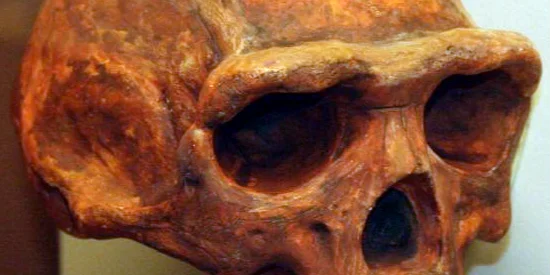
According to НВ — Техно: An international team of scientists has unveiled evidence suggesting Homo erectus appeared around 2 million years ago, which is approximately 200,000 years earlier than previously believed. Fossil remains excavated from the Drimolen site near Johannesburg, South Africa, confirm the presence of this early human ancestor in the region during that time. The study centers on 18 fossil specimens, with the adult Homo erectus fragment DNH 127 drawing particular attention. Earlier finds at the same location include the DNH 134 juvenile skull, also attributed to Homo erectus.
Insights into Paranthropus robustus
The research also identified 14 fossil fragments belonging to Paranthropus robustus, a species known for its large jaws and teeth adapted to processing tough, fibrous foods. Notably, 2 million years ago, Paranthropus robustus outnumbered Homo erectus at Drimolen by more than tenfold. Meanwhile, Homo erectus was evolving distinct traits such as a larger brain and smaller teeth.
These findings have been published in the Annals of Human Biology. Researchers are continuing their investigations to understand why Paranthropus robustus went extinct while Homo erectus survived. This research has significant implications for comprehending human evolutionary history and the development of our ancestors.
Understanding the earlier emergence of Homo erectus reshapes the narrative of human evolution, highlighting its pivotal role in the lineage leading to modern humans. Discoveries like these provide valuable context for exploring the ecological and biological pressures that influenced the survival and adaptation of hominid species. Ongoing studies promise to shed further light on the evolutionary mechanisms that shaped early human development.
These recent findings not only push back the timeline of early human evolution but also invite comparisons with other significant discoveries, such as the reconstruction of the face of the oldest known Homo sapiens. By examining these evolutionary milestones, researchers enhance our understanding of the complex lineage leading to modern humans.

Read also