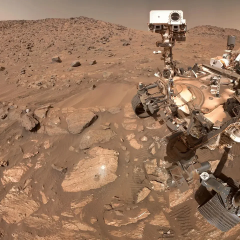
Mars colonization may find its key resource base in asteroids


Tomorrow's Space Logistics
According to НВ — Техно: Settling Mars could hinge on turning nearby asteroids into a supply of raw materials.
Published on August 9 at 12:00.
New research from the Swiss Federal Institute of Technology in Lausanne (EPFL) suggests that asteroid resources might one day support a permanent human presence on Mars. Launching everything from Earth is prohibitively slow and expensive, so scientists simulated thousands of potential delivery routes for metals, taking into account fuel needs, energy requirements, and the amount of metal that could be mined along the way.
What Makes the Supply Chain Hard
A trip from Earth to Mars lasts between six and nine months, which makes resupply missions tricky. Future settlements would need a steady influx of materials, including structural steel for living quarters, aluminum for machinery, and iron for tools and equipment.
- structural steel for habitat modules,
- aluminum for mechanical parts,
- iron for equipment.
The team examined millions of asteroids in the solar system, focusing on M-type asteroids, which are rich in iron, nickel, and other useful minerals. They also looked at whether rocket propellant could be manufactured from water ice locked inside carbonaceous asteroids. Using these simulations, the researchers say they have for the first time demonstrated mathematically that an independent logistics network spanning the solar system is feasible.
Their calculations show that some asteroids are close enough that existing spacecraft could reach them without consuming excessive energy.
EPFL researchers
The findings could become a cornerstone in planning and executing a Martian colony, drawing on raw materials already available in the asteroid belt rather than transporting everything from Earth.
Since Mars colonization is a central goal in modern space exploration, this work may reshape future mission designs. Using asteroids as a local source of supplies would lower costs and make Martian outposts far more self-sufficient, a key factor for long-term survival. That shift could redefine how space logistics are approached and open new paths for space technology and infrastructure. As more space agencies and private companies target Mars, understanding how to exploit space-based resources will be essential to sustainable exploration.
As we explore the potential for sustainable human presence on Mars, understanding the quest for evidence of life on the planet becomes increasingly crucial. The upcoming ESA rover mission, set to begin in 2030, aims to uncover signs of Martian life, complementing the efforts to establish a self-sufficient colony by utilizing resources from asteroids. This synergy between resource extraction and life detection could significantly enhance our aspirations for long-term habitation on Mars.

Read also