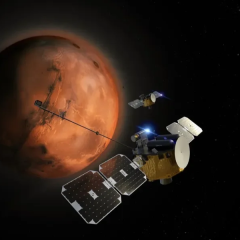
Hera Spacecraft Begins In-Depth Study of Binary Asteroid System Didymos and Dimorph

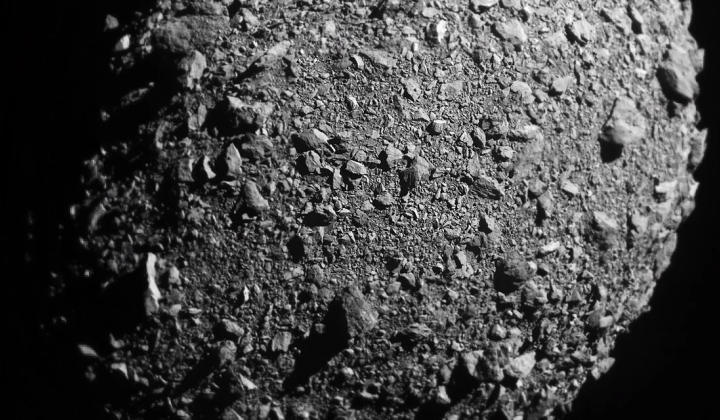
Exploring the Didymos and Dimorph Asteroid Pair
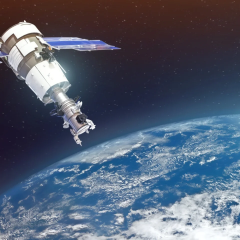
According to НВ — Техно: The European spacecraft Hera has initiated a comprehensive investigation of the binary asteroid system composed of Didymos and its smaller companion, Dimorph. This mission plays a crucial role in assessing the aftermath of NASA’s 2022 DART experiment, where the DART probe deliberately collided with Dimorph to test asteroid orbit deflection techniques. Hera's objective is to examine the orbital changes of Dimorph and analyze the debris generated by the impact.
Details about Hera’s mission were released on November 12 at 14:03. Currently, the spacecraft is observing the asteroids from a distance of approximately 25 to 30 kilometers. By next month, Hera aims to approach within about 20 kilometers for closer inspection. The DART impact shortened Dimorph’s orbit around Didymos and altered the motion of the asteroid pair around the Sun. The collision ejected a significant cloud of fragments and boulders from Dimorph’s surface, stretching over 10,000 kilometers and remaining visible for several months. Some of this debris may still linger near the asteroid.
Hera’s Advanced Scientific Capabilities
Equipped with 25 scientific instruments, Hera is designed to conduct a detailed survey of the binary system. Additionally, the spacecraft carries two small CubeSats roughly the size of shoeboxes, which will gather supplementary information about Dimorph and attempt surface landings.
- Dimorph measures approximately 151 meters in diameter,
- while Didymos is about 780 meters across.
Launched in 2024, Hera represents a significant advancement in asteroid research and planetary defense technologies. Understanding how to alter asteroid orbits is essential for protecting Earth from potential asteroid threats.
This mission marks a pivotal development in space exploration by providing vital insights into asteroid deflection strategies. Investigating the consequences of the DART impact will improve our knowledge of how small celestial bodies respond to external forces and aid in refining methods to avert possible hazards. The findings from Hera are expected to influence future missions focused on asteroid study and planetary defense efforts.
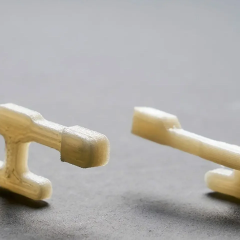
As spacecraft technology continues to advance, the recent success of the ASTRA robotic system in autonomously assembling components in low Earth orbit highlights the growing capabilities of space missions. This development complements Hera's objectives, emphasizing the importance of innovative technologies in both asteroid research and broader space exploration efforts.

Read also