ESA Rover Set to Hunt for Martian Life Signs Starting in 2030

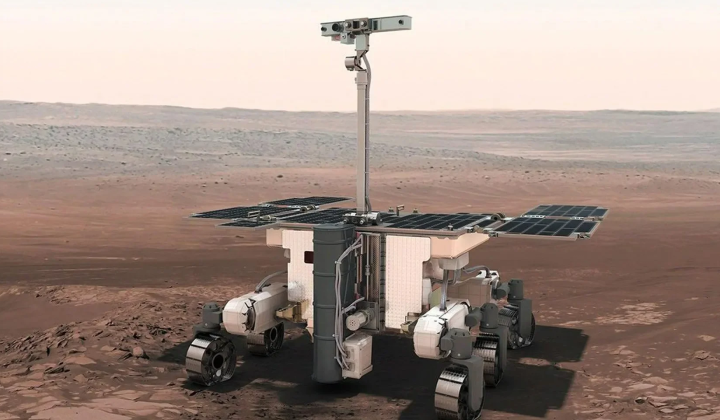
The Rosalind Franklin Mars Mission
According to НВ — Техно: In 2030, the European Space Agency's (ESA) Rosalind Franklin rover will begin its search for evidence of life on Mars. This mission marks a key milestone in efforts to determine whether life ever existed on the Red Planet. While NASA's rovers have previously detected organic molecules in Martian rocks, those findings do not constitute definitive proof of life.
Investigating Chiral Molecules
Scientists from the Max Planck Institute for Solar System Research (MPS), the University of Göttingen, and the Université Côte d'Azur in Nice, France, have tested a method for detecting chiral forms of the molecules pristane (C19H40) and phytane (C20H42). These two hydrocarbons are considered potential biosignatures because living organisms produce almost exclusively one mirror-image version of a chiral molecule. In contrast, molecules formed through non-biological processes contain roughly equal amounts of both mirror-image forms.
The Rosalind Franklin rover is equipped with the MOMA instrument (Mars Organic Molecule Analyzer), developed under MPS leadership. MOMA combines a gas chromatograph, a mass spectrometer, ovens, and an excitation laser, enabling precise measurements. For the first time, researchers have successfully separated the chiral forms of pristane and phytane using identical copies of MOMA's capillary tubes.
If life ever existed on Mars, molecules like pristane and phytane represent important molecular biosignatures that could have survived to the present day. - Guillaume Lescigneur, MPS
According to Uwe Meierhenrich from the Université Côte d'Azur, 'chirality is a valuable tool in the search for past extraterrestrial life.' He emphasized that 'the chiral separation of pristane and phytane requires high instrument sensitivity and measurement precision, and we show that MOMA can achieve both,' noted Fatma Yesil Sahan from MPS.
Earlier this year, NV Techno reported that NASA's Perseverance rover discovered several extremely complex carbon compounds on the floor of Jezero Crater. These findings open new avenues for studying Mars and the potential for life on the planet.
The Rosalind Franklin mission represents a major step forward in expanding our understanding of Mars and its potential for harboring life. By leveraging cutting-edge technology like the MOMA analyzer, scientists will be able to examine organic compounds in detail, potentially confirming or refuting hypotheses about past life on Mars. Such research also highlights the growing international collaboration in space exploration, which could lead to new breakthroughs in astrobiology and planetary science.
As the Rosalind Franklin rover prepares for its mission, it's important to note that NASA's previous discoveries have already laid the groundwork for understanding Mars' organic chemistry. Recent findings of complex organic compounds on the Martian surface highlight the potential for life beyond Earth and set the stage for future explorations like that of the ESA rover.

Read also