170 Million Black Holes Estimated to Populate the Milky Way

Milky Way's Evolutionary History
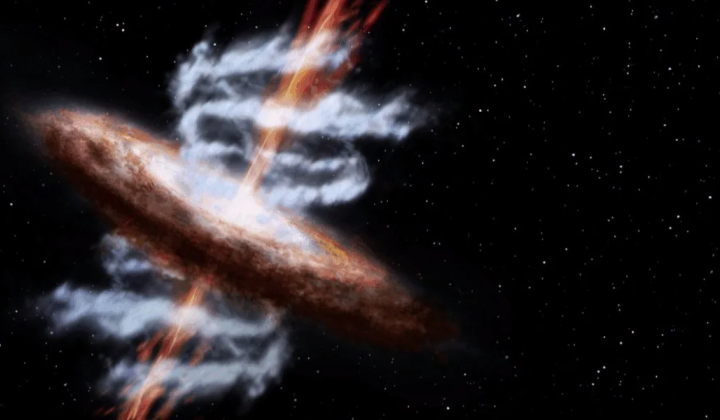
According to НВ — Техно: Stellar-mass black holes are the collapsed remnants of massive stars, and a new study suggests the Milky Way contains about 170 million of them. The estimate comes from a simulation led by US astrophysicist Tom Wagg, which modeled 13.6 billion years of the galaxy's evolution. That model allowed scientists to trace how black holes are spread out, measure the thickness of the layer they form, and assess how supernova explosions change their movement through the galaxy.
Key Findings
At the same distance from the galactic center as our Sun, the team calculated there should be roughly one black hole per 6,250 cubic parsecs-a space about 60 parsecs on a side, or nearly 196 light-years across. The black holes occupy a layer around 790 parsecs thick, while the Milky Way's stellar disk is about 306 parsecs thick.
When a star explodes as a supernova, the resulting black hole can receive a kick that sends it moving through the galaxy. Most of these black holes stay inside the Milky Way, but they do not remain stationary. Lighter black holes tend to wander farther away from the galactic plane than heavier ones, largely because heavier black holes form from material that falls back during the explosion, slowing their motion.
These results give astronomers a clearer picture of the Milky Way's structure and dynamics, as well as the connections between black holes and other celestial objects. The research, which has drawn wide attention in the scientific community, reinforces how complex and varied the processes shaping our galaxy truly are.
By refining estimates of black hole numbers and locations, the findings open up new questions about how these extreme objects evolve and influence the galaxy around them-questions that could guide future studies of galactic formation and development.
Understanding the dynamics of black holes is crucial, especially in light of recent findings that suggest these phenomena can eject as much matter as they absorb. This interplay could significantly impact our comprehension of the Milky Way's structure and the behavior of celestial objects within it.

Read also