Astronomers Find Black Holes Can Push Out Roughly as Much Matter as They Pull In

Cosmic Give-and-Take: A Black Hole's Outflows May Equal Its Inflows
According to НВ — Техно: August 2, 22:00
Black holes are often depicted as all-devouring objects, but a new study points to a more balanced cosmic relationship. Researchers led by Dr. Noel Castro Segura, from the University of Warwick in the UK, used the European Southern Observatory's Very Large Telescope (VLT) to revisit the black hole system Swift J1727.8−1613. They found that even after the system's energy output had fallen to about 1 percent of its peak, the black hole continued to eject dense gas. The team estimates that the total amount of ejected material may be comparable to the mass the black hole consumes.
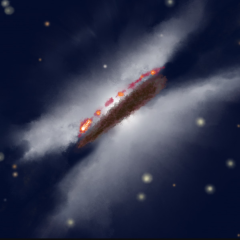
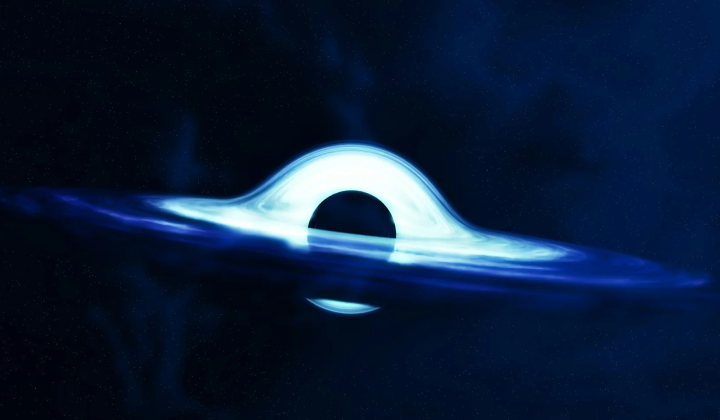
The black hole was observed pulling gas from a nearby companion star, creating a rapidly spinning accretion disk of superheated matter. At the same time, the system drove jets and cosmic winds that sent part of that matter back into space. The outflow kept going well after the main burst of radiation ended, despite the source's activity having dropped sharply.
A Shift in How Astronomers See Black Holes
These findings imply that a significant share of the material spiraling toward the black hole never actually crosses the event horizon. That challenges the standard image of black holes as highly efficient vacuums. For the first time, scientists tracked the link between matter falling inward and matter being expelled in real time. As a result, the role of black holes in shaping their surroundings now looks far more active than previously assumed.
Carrying the DOI: 10.1093/mnras/stag1175, these observations could have a notable influence on astronomy and astrophysics by reinforcing that black holes matter not only for what they consume, but for what they send back into space.
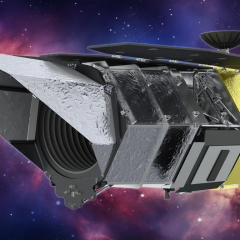
A clearer grasp of how black holes both take in and push out material may reshape our understanding of galaxy formation and the structure of the universe. It also highlights the value of advanced observational tools such as the VLT, which enable astronomers to capture these dramatic extreme cosmic events as they unfold.
These recent findings not only reshape our understanding of black holes but also resonate with ongoing investigations into the universe's early stages. For instance, researchers are exploring the intriguing possibility that primordial black holes may have been detected, potentially shedding light on the formation and evolution of cosmic structures. Such studies could further illuminate the complex dynamics of matter within these enigmatic entities.

Read also