Uncovering an Unusual Black Hole Mass Pattern Suggests Stars May Collapse Without Exploding as Supernovae

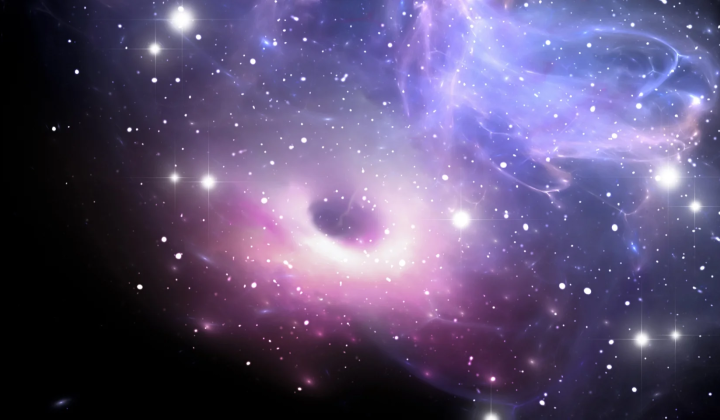
An Unexpected Pattern in Black Hole Masses Discovered
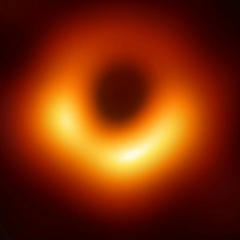
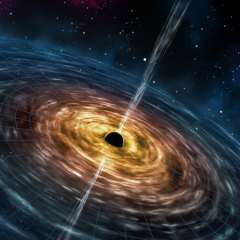
According to НВ — Техно: Researchers at the California Institute of Technology have identified a surprising distribution in black hole masses that hints at a formation process involving the silent collapse of stars, bypassing the typical supernova explosion. By examining 257 black hole mergers detected over the past decade by the global gravitational wave observatories LIGO, Virgo, and KAGRA, scientists found that about 75% of these black holes have masses near 10 times that of our Sun. In contrast, black holes weighing between 12 and 16 solar masses are notably scarce.
Black holes around 10 solar masses also display a narrower range of spin rates compared to the rest of the sample, indicating a distinct formation pathway. This pattern aligns with theoretical predictions for "failed supernovae," where a star collapses quietly without a dramatic explosion. While these findings support such models, they do not yet provide conclusive proof of this formation mechanism.
The Role of Gravitational Waves in Black Hole Research
The first-ever detection of gravitational waves from a black hole merger was achieved by LIGO in 2015, marking a breakthrough in astronomy. Since then, the combined efforts of LIGO, Virgo in Italy, and Japan's KAGRA observatory have recorded over 300 black hole collisions. Gravitational waves are ripples in the fabric of spacetime generated during the movement and merging of massive objects.
As Isaac Lagrède noted, "Gravitational waves provide a unique window into the deaths of massive stars that don’t produce bright explosions."
These new insights into black hole masses and spins could reshape our understanding of how black holes form and evolve. The study of stellar collapse mechanisms and black hole creation has significant implications for cosmology and deepens our grasp of the extreme physical conditions governing the universe.
In addition to the intriguing findings regarding black hole mass patterns, researchers are also exploring the dynamics of supermassive black holes in galactic centers. A recent study highlights a duo of supermassive black holes at the core of Mrk 501, which orbit each other every 121 days and are on a collision course. This discovery could provide further insights into the complexities of black hole interactions and their evolutionary processes. For more details on this fascinating phenomenon, check out the full story on the supermassive black hole duo.

Read also