A Rare Silver Denarius Struck by Self-Proclaimed Emperor Carausius Has Been Uncovered Near London

The Rebel Emperor
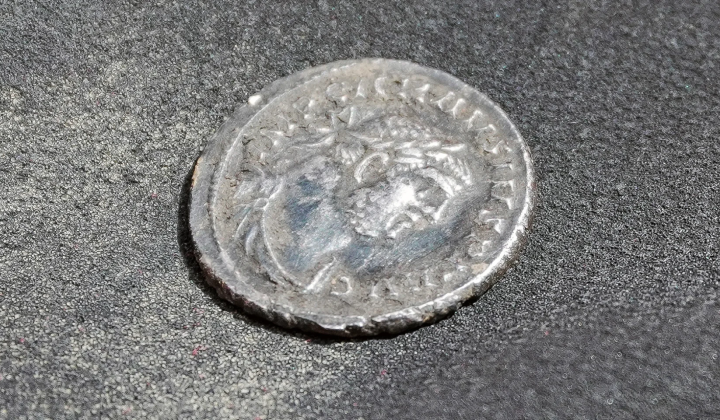
According to НВ — Техно: Archaeologists working alongside the route of the new East West Rail link have found a rare silver denarius near London, dated to 287 AD. It was minted under Carausius, the self-proclaimed emperor who broke away from Rome and established his own authority over Britain and parts of northern Gaul. The coin's obverse shows a draped bust of Carausius facing right, along with the inscription IMP CARAVSIVS PF AVG. Carausius, who lived from approximately 250 to 293 AD, was a Roman citizen of the Menapii people in Belgium and commanded the Roman fleet called the Classis Britannica. This discovery adds freshly to the story of a time when imperial power in Britain was contested from within.
Carausius earned his place in history through rebellion. He had fallen out of favour after taking confiscated treasures from captured pirates and withholding them from Rome, and Emperor Maximian condemned him to death. Rather than submitting, Carausius rose up, took hold of Britain and northern Gaul, and declared himself emperor in 286 AD, remaining in power until 293 AD. He made London the site of his coin production, giving that city the distinction of issuing Roman coins for the first time.
The Archaeological Discovery
In 293 AD, Constantius Chlorus, the western Caesar, recovered parts of Gaul. A full-scale invasion to retake Britain followed in 296 AD. Before that could happen, however, Carausius was killed by his own treasurer, Alectus, who took the title of emperor and died in battle soon afterward.
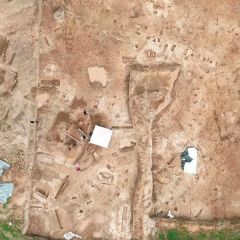
Alongside the coin, archaeologists have uncovered a Roman military-industrial complex in Offerton containing more than 800 whetstones. That figure is especially striking because barely 250 whetstones had previously been found in the whole of the British Isles. These discoveries come out of an ongoing programme in advance of building East West Rail, the railway planned to run between Oxford and Cambridge. The programme calls for digging 6,000 trial trenches, each more than 50 metres long. Findings will feed into the environmental impact assessment and final design, while the archaeological phase itself is expected to last two years.
Unearthing Carausius's denarius and the surrounding artefacts demonstrates the deep historical importance of the area and gives new insight into the Roman presence in Britain.
This discovery may alter how historians see Roman authority in the British Isles and the region's ties to the wider empire. As research along the East West Rail corridor continues, further finds are anticipated, offering an ever fuller picture of this era.

Read also