Artifacts from two Swedish ships that sank near Rügen more than three centuries ago have been recovered

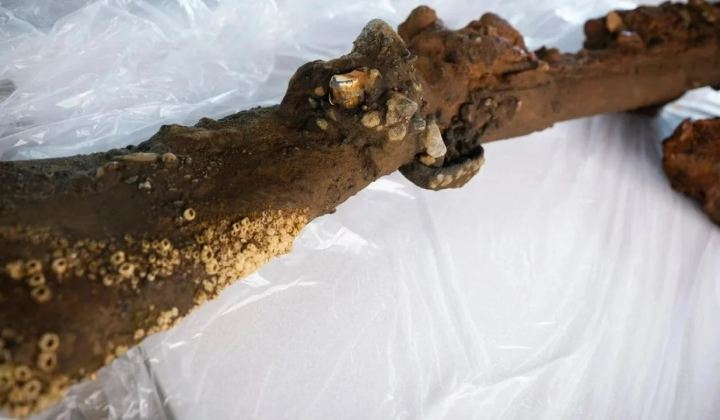
Artifacts from the Postillion and Cecilie Come to Light
According to НВ — Техно: On August 10 at 17:30, word emerged that well-preserved objects had been brought up from two Swedish vessels, the Postillion and the Cecilie, that went down in the Baltic off the island of Rügen during the harsh winter of 1714–1715, in the middle of the Great Northern War. That conflict pitted Sweden against a coalition led by Russia, Denmark–Norway, and Saxony–Poland–Lithuania. Both ships grounded in appalling winter weather and sank, leaving the bulk of their cargoes behind. No serious salvage operation followed, which is why their contents survived nearly untouched for more than 300 years. This latest find is another reminder of how much of the Baltic's maritime past still lies below the surface.
The Investigation and What It Turned Up
Postillion's wreckage was initially located in 2016, during seabed surveys for the Nord Stream 2 pipeline. The remains of the Cecilie were found subsequently, close to the Baltic coast. Specialists from the Swedish National Heritage Board and Stockholm's Vrak Museum carried out the study and uncovered several objects, among them:
- a ship's bell
- a bronze cannon barrel
The cannon barrel is now being studied by archaeologists in Schwerin. The researchers suspect it was captured during the Thirty Years' War, meaning it was already roughly eight decades old at the time of the vessel's loss. The wider assemblage includes weapons, gear, and household items. The Baltic's cold, low-salinity water is excellent for preserving organic materials, and that played a key part in keeping these objects intact.
The same context also includes mention of a Roman shipwreck discovered roughly three nautical miles from Mazara del Vallo, lying at a depth of 46 meters, with a cargo made up of hundreds of amphorae, most of them of the Dressel 1A variety. NV Techno had earlier reported on that Roman shipwreck, which is located near Sicily. These archaeological discoveries open new possibilities for the continued exploration of maritime history and cultural heritage in the region.
The recovery of objects from the Postillion and the Cecilie underscores how valuable underwater archaeology can be in reconstructing the Great Northern War and the relationships between the countries involved. Because the finds were preserved so well, they offer a rare window into daily routines, period technology, and the ways in which armed conflict affected maritime commerce and culture. They could also form the foundation for future studies and educational initiatives devoted to the maritime heritage of the region.
In a similar vein, the discovery of a merchant ship off the coast of Andros, which was carrying around 650 amphoras, highlights the rich maritime history that remains hidden beneath the waves. This recent find by Greek marine archaeologists underscores the importance of ongoing underwater exploration, revealing how much more there is to uncover in our seas. To learn more about this fascinating shipwreck and its implications for our understanding of ancient trade, read about the recent discovery near Andros.

Read also