A sunken merchant ship carrying up to 650 amphoras has been discovered off Andros by Greek marine archaeologists

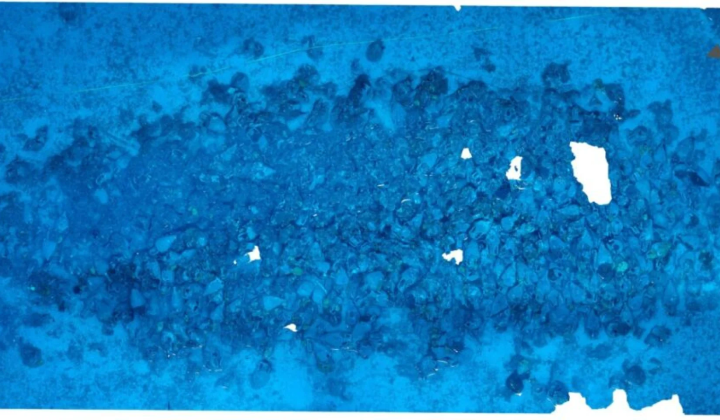
Ancient Trading Shipwreck Located
According to НВ — Техно: Greek marine archaeologists have uncovered the cargo of an ancient merchant vessel off the coast of Andros, with the hold carrying somewhere between 600 and 650 amphoras. The wreck lies at a depth of 39–44 meters, and the pottery cargo suggests the ship went down in the late 5th or early 4th century BCE. Greece's Ministry of Culture made the announcement on 31 July 2026, noting that the Ephorate of Underwater Antiquities launched the mission after a private citizen supplied a tip. The island sits in the Aegean Sea, a classic crossroads for ancient Mediterranean shipping.
Amphora Types and Their Origins
Three distinct ceramic categories have been identified among the amphoras: Mende, Peparethus, and Solokha 2. The Mende type comes from the Kassandra Peninsula in the northern Aegean, while Peparethus corresponds to the present-day island of Skopelos. For Solokha 2, the origin is less clear-it may have been made in the northern Aegean or in the Black Sea region. To clarify these questions, archaeologists have brought up one example of each type for more detailed laboratory analysis.
Ministry officials report that northern Aegean amphoras of this kind were exported to Athens, the Black Sea, and other trading hubs. Alongside the ceramics, the team recovered a fragment of a lead anchor and a handful of stones that may have served as ballast. Notably, the ministry's account says nothing about a preserved wooden hull, suggesting the vessel's structure may have completely disintegrated.
Earlier underwater discoveries in the wider region add historical depth to the new find:
- A Byzantine ship that sank near the Croatian island of Mljet yielded more than 600 grams of gold.
- Gem-encrusted hardware, imperial coins, and an exceptionally rare signet ring have also been recovered from ancient wrecks.
The growing list of finds underscores how much remains to be learned about Mediterranean seaborne commerce in antiquity.
The ship's likely route would have run through the northern Aegean, touching the ports of Mende and Peparethus before continuing toward waters off Andros-possibly onward to Athens and Piraeus. This discovery broadens our understanding of ancient trading patterns and seafaring in the region.
For Greek archaeology, the Andros wreck is a major event because it offers a fresh window onto the maritime economy of the classical era. The mixture of amphora types points to vigorous exchange between distant regions and highlights the importance of underwater survey work in preserving Greece's cultural heritage.
This recent find off Andros adds to the growing list of significant underwater discoveries in the Mediterranean. For instance, a 17th-century Dutch shipwreck revealed a treasure trove of gold coins, highlighting the rich maritime history of the region. Such discoveries not only provide insight into ancient trade routes but also enhance our understanding of the cultures that once thrived along these waters.

Read also