Critical Supply Breakdown in Crimea, Warns British Intelligence

Mounting Pressure in Occupied Crimea
According to Главком: Ukraine's Defense Forces have intensified strikes on occupied Crimea and the Kerch Strait crossing, creating severe logistical bottlenecks on the peninsula. According to the UK Ministry of Defence, on June 20, Ukrainian forces targeted air defense systems, fuel depots, and three car ferries, resulting in a major fuel shortage and significant delays at crossing points.
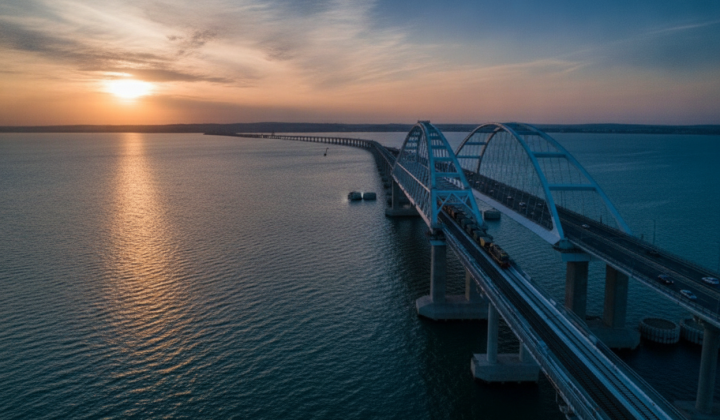
Since the October 2022 attack on the Kerch Bridge, trucks have been barred from using that route, leaving ferries as their only option. The bridge remains open to cars, buses, and some rail traffic. However, two rail ferries were hit in March and April 2026, further disrupting transportation. Additionally, a partial collapse of the road bridge across the Arabat Spit has been reported following Ukrainian drone strikes.
Logistics and Supply Crises
Occupied Crimea is now grappling with electricity outages, fuel shortages, and mounting logistics challenges. Ukrainian forces continue to strike infrastructure near Kerch, Feodosia, and Sevastopol, including the destruction of a bridge over the North Crimean Canal. The UK Ministry of Defence noted that
“the disabling of three ferries, especially given that the southern land corridor to Crimea remains contested territory, has almost certainly worsened the peninsula’s steadily growing supply problems.”
It further stated that
“Ukraine is striking Russian military logistics networks in occupied territories with increasing intensity, aided by a range of attack drones and long-range munitions.”
This, in turn, 'expands Ukraine’s capacity to target the Kerch Bridge-a strategically and politically sensitive asset inaugurated by President Putin.'
As a result, the situation in occupied Crimea remains tense, with persistent supply and logistics disruptions compounded by active Ukrainian military operations.
The escalation of hostilities in Crimea reflects the ongoing conflict and the growing assertiveness of Ukraine’s Armed Forces in their effort to reclaim control over the territory. Disruptions to logistics and supply chains on the peninsula could have serious consequences for the occupation administration, undermining its ability to sustain military units and the civilian population. These developments underscore Crimea’s strategic significance in the broader Ukraine-Russia conflict.
The ongoing logistical challenges in occupied Crimea are further exacerbated by recent Ukrainian strikes, which have significantly impacted Russian supply lines. As evidenced by the situation at Port Kavkaz, where similar operations have crippled Russian logistics, the situation remains precarious for occupying forces. For a detailed analysis of how these strikes affect the broader logistical landscape in Crimea, see our report on the impact of recent Ukrainian actions on Russian supply routes.

Read also