A Hole the Size of Washington: How Trump's Tariff Policy Hit the American Budget

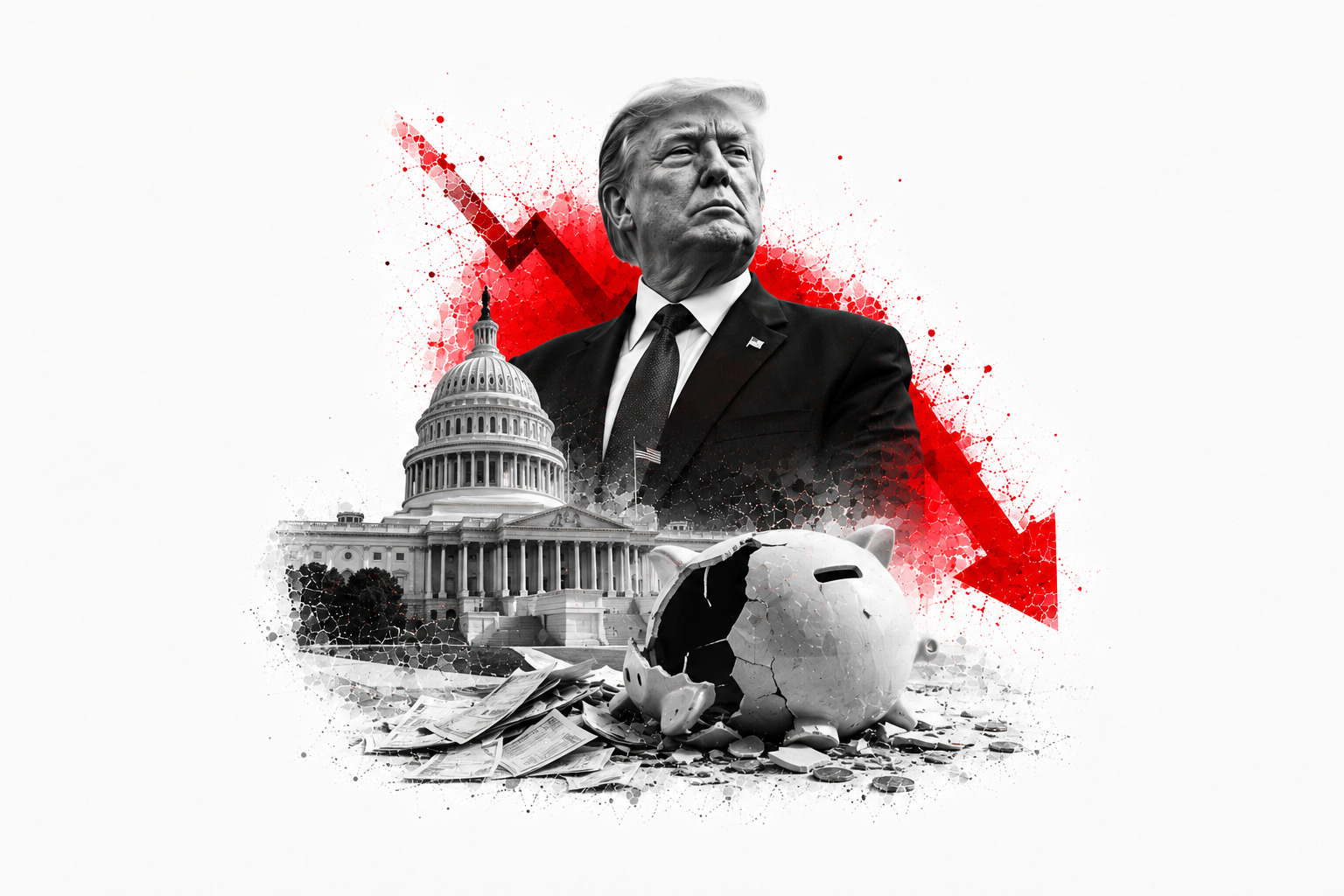
American budget arithmetic increasingly resembles not a tale of 'trade victories' but rather an expensive series of experiments for which Washington ultimately receives the bill.
According to the U.S. Department of Treasury, the federal budget deficit reached $432 billion in July-approximately 48% more than the previous year. This is the worst July figure in history and one of the largest monthly deficits since the pandemic lockdowns in 2021.
Since the beginning of the financial year, the cumulative deficit has already reached $1.799 trillion, exceeding last year's result even before the budget cycle is complete.
But the most telling part of this story is the fate of Donald Trump's tariff policy.
Tariffs That Started Costing Money
The logic of the tariffs was simple: raise import costs, force foreign producers to give way to American companies, and simultaneously fill the budget with customs revenues.
In practice, the mechanism turned out to be significantly more complicated.
In July, net customs revenues were negative. The Treasury refunded businesses $33.38 billion, and a month earlier-another $49.2 billion.
The total amount of refunds already made exceeded $100 billion from about $166 billion previously collected from importers under tariffs that later became the subject of lawsuits.
The tariff, which was supposed to be a source of income, turned into a budget obligation.
Legal Boomerang
This is where trade policy intersects with the American institutional system.
If a court rules that some tariff decisions are illegal or implemented beyond authority, the government is obliged to return already received money.
Thus arises a rare effect for tax policy: the state initially records budget revenues, then is forced to reverse them due to court decisions.
As a result, budget forecasts are inflated, and the deficit is larger than anticipated.
The Congressional Budget Office is already estimating the revenue shortfall at about $250 billion compared to previous expectations.
New Tariffs Instead of Old Ones
However, the administration does not abandon the very instrument.
New tariffs-ranging from approximately 10% to 12.5% for dozens of trade partners, which account for the vast majority of American imports-replace the contested measures.
The political logic is clear. The White House wants to protect domestic producers, reduce the trade deficit, and demonstrate firmness towards foreign competitors to voters.
The problem is that tariffs are not a free tax on foreigners.
They are first paid by American importers. Part of the costs is passed on to consumers through higher prices, part to suppliers, and part is absorbed in their own margins.
In the end, tariff policy turns out to be not only a trade issue but also an inflationary and budgetary one.
Costs Continue to Rise
Simultaneously with weaker revenues, Washington faces another problem: federal expenditures remain extraordinarily high.
In a month, they increased by about 22%-to $766 billion.
Large social programs, defense, servicing the national debt, and other mandatory budget items leave the government with increasingly less room to maneuver.
This is why even tens of billions of dollars in tariff revenues look modest against a deficit measured in trillions.
Trade Policy Meets Budget Reality
In Washington, tariffs are marketed as a tool of power. In budget reporting, they appear much more mundane.
If new tariffs bring in revenue but simultaneously provoke court refunds, raise prices, and create uncertainty for businesses, their net effect becomes far less obvious.
It is here that the main paradox of current American trade policy lies.
The idea was to force the outside world to pay more to America. But if part of that money has to be returned, and the deficit continues to set records, the bill ultimately remains within the country.
In politics, tariffs may appear as a weapon.
In accounting, they remain just another line on the balance sheet.

Read also