New Prisoner Exchange Announced by Ukraine’s Budanov in Coming Days

Ukraine and Russia Prepare for Another Swap of Prisoners of War
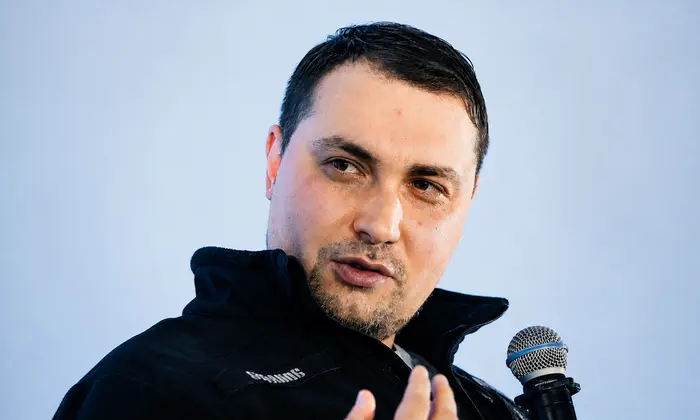
According to Главком: Kyrylo Budanov, head of Ukraine’s Defense Intelligence (HUR), announced that a fresh exchange of prisoners of war between Ukraine and Russia is expected to take place shortly. He made this statement on June 1 during the ‘Security Architecture’ forum, emphasizing that the exchange process remains ongoing. Budanov did not disclose the exact number of individuals to be swapped but noted that exchanging civilians is a more complex issue, as Ukraine holds fewer civilian hostages compared to the Russian Federation.
Details of the Exchange
HUR has revealed preparations for a large-scale swap under a ‘1,000-for-1,000’ framework. Andriy Yusov, a representative of HUR, described the upcoming exchange as ‘mixed,’ meaning it will include various categories. Those expected to be returned include:
- military personnel held captive since 2022;
- women;
- severely ill individuals;
- those with serious injuries.
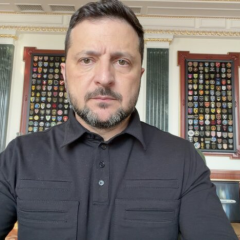
The first phase of the ‘1,000-for-1,000’ exchange took place on May 15, resulting in the return of 205 Ukrainian soldiers from Russian captivity. Most of these soldiers had been held since 2022. In December 2025, President Volodymyr Zelenskyy pointed out that Russia is deliberately slowing down exchanges, seeking broader political agreements. Dmytro Lubinets, Ukraine’s ombudsman, also attributed the delays to Russia’s stance.
Discussing the exchanges, Budanov expressed optimism:
‘I think that in the near future you will see another exchange of prisoners of war.’
He added, ‘We do not have the same number of civilian hostages as the Russian Federation, for obvious reasons. But we are still gradually bringing people back.’
According to available information, Russia is actively stalling exchange processes-a point confirmed by President Zelenskyy, who stated:
‘The Russians have started to slow down the exchange processes because they want overall agreements.’
Budanov also assessed the chances of ending the active phase of the war by November.
Prisoner exchanges are a critical component of Ukraine’s humanitarian policy, as repatriating citizens from captivity demonstrates the state’s commitment to protecting its people. Prolonged delays, particularly from Russia, highlight the complexity of negotiations and the political motives influencing the situation. Despite these challenges, the continuation of exchanges sends a positive signal for rebuilding trust and advancing humanitarian efforts amid the ongoing conflict.
As the prospect of another significant prisoner exchange looms, it is essential to understand the underlying factors affecting these negotiations. Recent reports indicate that Moscow's position is hindering the 1,000-for-1,000 exchange, complicating the overall process. This context highlights the challenges faced by Ukraine in securing the return of its citizens amidst ongoing geopolitical tensions.

Read also