War Brings Unexpected Ecological Recovery to the Black Sea, Scientists Report

How Conflict Is Reshaping the Black Sea's Environment
According to Главком: According to Viktor Demchenko, deputy director of the Institute of Marine Biology at the National Academy of Sciences of Ukraine, the Black Sea's ecological indicators improved during the first year of the full-scale war due to reduced human pressure. Fewer tourists, a decline in economic activity, and lower industrial emissions all contributed to this change. However, localized pollution from military operations-including explosions and oil spills-remains a concern.
Viktor Demchenko: 'So far, no high concentrations of these substances have been detected along the coastline.'
Researchers observed that the Black Sea's environmental health began recovering as early as the first year of the war. The Institute of Marine Biology relies heavily on remote sensing to monitor sea conditions and is developing a post-war framework for restoring marine ecosystems. Demchenko noted that 'two opposing processes are currently at play. Overall, when we look at how military actions affect Black Sea ecosystems, we see the water bodies' remarkable capacity for self-recovery.'
Sturgeon Populations Rebound and Kakhovka Dam Aftermath
A major wartime development was the ban on commercial fishing, which helped sturgeon populations recover. In Ukraine, five adult sturgeon have been recorded in the Dnipro River. Before the full-scale war, the Danube River saw 10–15 sturgeon per year; now that number has risen to 40–50. Sterlet and beluga sturgeon have been listed in the Red Book since 1994, while stellate sturgeon and Russian sturgeon were added in 2009. At the same time, after the Kakhovka Hydroelectric Power Plant was destroyed in June 2023, the sea's ecosystem recovered within a year. Viktor Demchenko stated that 'one year after the explosion at the Kakhovka HPP, the Black Sea ecosystem had almost fully recovered.'
Studies showed that following the dam's destruction, water salinity near Odesa dropped from 16–17 parts per thousand to just three. However, within about two months, salinity returned to average long-term levels. The event killed more than three thousand tons of mussels in the coastal zone, but 30% of mussels living deeper than 2–3 meters survived. In 2024, a mussel reproduction surge was observed.
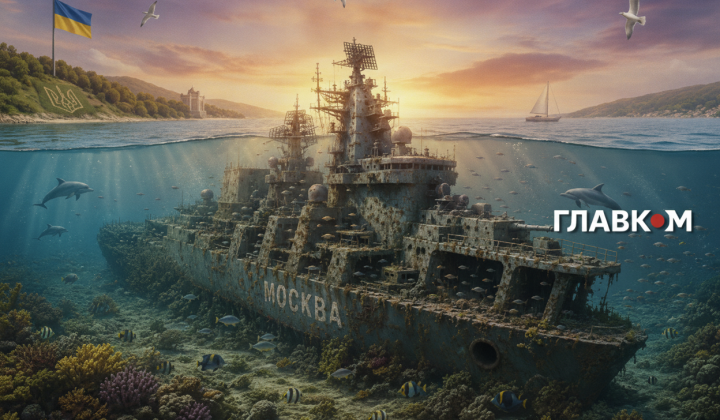
Several sunken vessels remain on the Black Sea floor, including the cruiser 'Moskva'. Ukrainian scientists are also working on post-war marine restoration projects. They conducted assessments for the Prosecutor General's Office to evaluate biodiversity losses after the Kakhovka HPP destruction. Viktor Demchenko emphasized that 'when the Kakhovka HPP was blown up in June 2023, our first thought was that the sea would change dramatically and take a long time to recover.' Yet, he added, 'the most severe changes stopped within two to three months.'
Thus, despite the challenges of war, the Black Sea is showing signs of ecosystem recovery, highlighting the resilience of natural processes.
The positive environmental shifts observed in the Black Sea during wartime underscore how vulnerable natural systems are to human activity. Reduced economic operations and the fishing ban have helped revive certain species, offering hope for biodiversity conservation. At the same time, localized pollution from military activities remains a serious issue that will need to be addressed in the post-war period.

Read also