Jared Kushner on Ukraine-Russia Talks: Security Assurances and Prisoner Exchanges Ahead of the Holidays

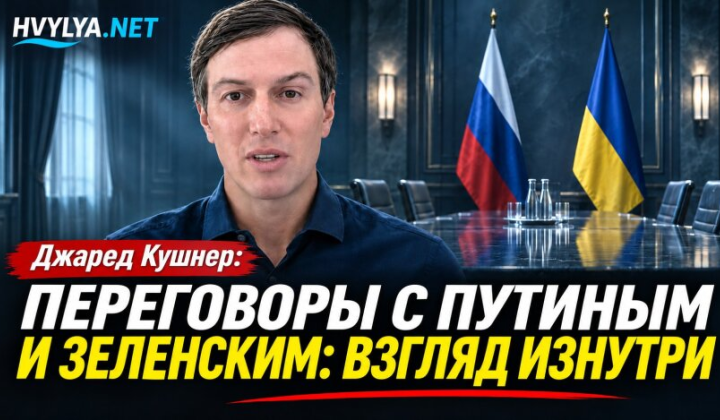
New Episode of the MD MEETS Podcast
According to ХВИЛЯ: In the latest MD MEETS podcast episode, host Mathias Döpfner interviews Jared Kushner, who, alongside Steve Witkoff, worked on efforts to end the Russia-Ukraine conflict during Donald Trump’s presidency. The conversation covers diplomatic negotiations involving Russia, Ukraine, and European governments, tackling key issues such as security guarantees for Ukraine, the Abraham Accords, the Gaza conflict, Iran, and Kushner’s personal values. The discussion sheds light on critical diplomatic milestones, prisoner exchanges, Europe’s role, Putin’s stance, and the challenges facing the Middle East.
Diplomatic Talks and Progress Made
Negotiations took place in Abu Dhabi, Moscow, Dublin, and at a European summit in Berlin. The war between Russia and Ukraine has lasted nearly five years, with President Trump viewing its resolution as a top priority. Trump highlighted that over 25,000 to 30,000 lives are lost monthly in the conflict. Kushner became actively involved in mediation about a year ago, with meaningful progress emerging in late November. However, a Ukrainian strike on Putin’s residence in December complicated the talks. Meetings with both Putin and Zelensky in September resulted in agreements for the largest prisoner swap before the holidays.
Kushner noted that both sides were eager to assess their battlefield gains and emphasized the importance of peace agreements.
“Ending this war was President Trump’s primary objective,”
he stated. Two main proposals for resolving the conflict were discussed:
- Ceasefire and freezing hostilities
- Ukraine relinquishing control over Donbas in exchange for NATO membership
Ukraine seeks security guarantees from the U.S., which Kushner and Witkoff formulated in a framework similar to NATO’s Article 5. However, President Biden has been reluctant to offer such assurances, while Trump was open to them under certain conditions.
Post-war security architecture talks include security guarantees, economic reforms, and humanitarian initiatives. Kushner stressed,
“Ukraine will not end the war without defensive capabilities and firm guarantees.”
Conversely, Russia demands security assurances and military movement controls after the conflict. Kushner pointed out, “We pushed strongly for a ceasefire, but Putin appears uninterested.” Plans are underway to establish hotlines between Russia, NATO, and Europe to help ease tensions.
Regarding the Gaza conflict, Kushner and his team successfully secured the release of 20 living hostages and the return of 28 bodies from Gaza. Key steps proposed for Gaza include:
- Demilitarization
- Reconstruction efforts
- Formation of a technocratic government
- Deployment of international stabilization forces led by General Jeffers
Kushner emphasized respect as a core principle in his personal philosophy: “Treat others with respect. Treat others the way you want to be treated.”
This discussion highlights significant elements of international diplomacy and security amid a prolonged war. It underscores Ukraine’s complex position, especially its urgent need for credible security guarantees to end the conflict. Given the lack of consensus among involved parties and differing approaches, future negotiations will demand considerable commitment from all stakeholders.
As discussions around the Ukraine-Russia conflict continue to evolve, it's essential to explore the broader implications of these diplomatic efforts. For instance, the U.S. is advocating for direct talks between Europe and Russia, which could significantly influence the future of Ukraine's security and support framework after the war. Understanding these dynamics can provide deeper insights into the ongoing negotiations and their potential outcomes.

Read also