Former U.S. General: Why Sanctions on Russia Are Only 30% Effective


Assessing the Sanctions Regime Against Russia
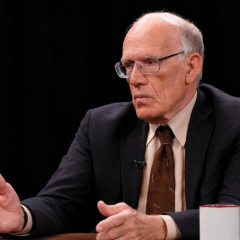
According to ХВИЛЯ: In an interview with PBS NewsHour's Compass Points, retired Lieutenant General Keith Kellogg provided a critical analysis of the economic sanctions targeting Russia. He highlighted specific pressure points, including the so-called 'shadow fleet' used to transport Russian oil. Kellogg revealed that the U.S. Treasury Secretary's own assessment rates the sanctions' effectiveness at a 6 out of 10, while their actual enforcement is rated at just a 3. This evaluation underscores a significant gap between policy intent and practical implementation.
Kellogg pointed to the stark price difference between Russian Urals crude, trading at around $40 per barrel, and the global benchmark Brent crude at $70 per barrel. He emphasized the direct link between oil revenue and the war effort, stating,
"Putin pays his troops and funds the war through oil."
Furthermore, he noted that 70 percent of this shadow fleet traffic moves through the Baltic Sea, adding,
"Seventy percent of this goes through the Baltic. You can stop it if you want to."
This highlights a clear, tangible vulnerability in Russia's sanctions-evasion network.
The analysis also touched on the substantial compensation of $200,000 paid by the Kremlin for a soldier's death, and the cultural context implied by the phrase 'a grandmother east of the Urals is a lifetime.' These factors illustrate that the economic pressure on Russia is a complex, multi-faceted challenge requiring sustained international focus. The sanctions are a key Western tool, but their impact is diluted by evasion tactics.
The Call for More Decisive Action
In the context of Russia's ongoing military aggression, Kellogg's remarks stress the urgent need for the international community to take more decisive steps. Strengthening sanctions enforcement and cracking down on shadow resource transportation schemes are paramount. The central task remains boosting the enforcement level to significantly reduce the funding for Russia's war machine and exert greater pressure on its economy. Without closing these loopholes, the financial cost to Russia remains manageable.

Read also