Ukraine Is a Laboratory for Future Warfare, Says Former Google CEO

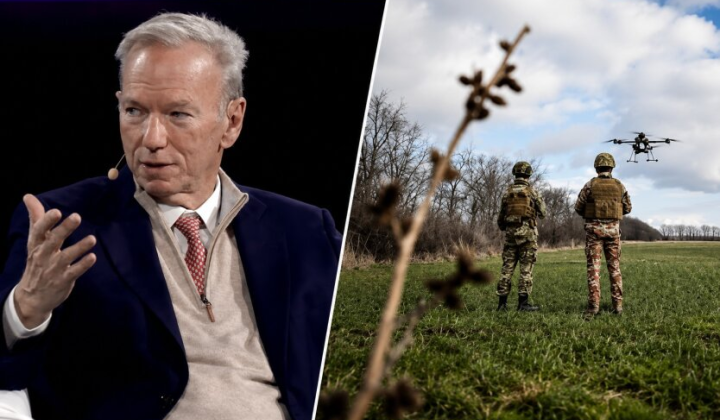
Eric Schmidt Speaks at the SCSP AI+ Expo
According to ХВИЛЯ: At the SCSP AI+ Expo, former Google CEO Eric Schmidt described Ukraine as a 'laboratory for future warfare.' He emphasized that the modern Ukrainian front is defined by a 'transparent battlefield,' where drones have become central to combat operations, replacing traditional equipment like tanks and artillery. Schmidt noted that infantry soldiers remain in trenches for at least 50 days, and in some cases, three to four consecutive months, creating new challenges for military strategies.
Technology and Automation in Warfare
During his speech, Schmidt highlighted that water and food are delivered by drones, and the Ukrainian military reports destroying approximately 35,000 Russian targets each month. The main fighting occurs in a zone 40 to 100 kilometers deep into enemy territory, which Schmidt referred to as the 'mid-strike area.' He also stated that future wars will become increasingly automated and robotic.
'Anything that moves gets destroyed. Tanks, armored vehicles, artillery, flamethrowers-all the flashy equipment you see in movies-it’s essentially over.' - Eric Schmidt
In addition, Schmidt compared China’s lag behind the United States in artificial intelligence, estimating it at six months at the time of his speech. Previously, he had indicated that this gap was one to two years. He noted that Chinese developers are working with Ascend chips, and the new DeepSeek V4 model was introduced a week ago. 'That’s a nanosecond in our world,' he commented on China’s narrowing gap.
Schmidt also expressed that 'a typical example is taking a target and surrounding it with drones that strike simultaneously. Most targets cannot defend against a 360-degree attack.'
Eric Schmidt stressed that data from the Ukrainian front is unique, and due to national security concerns, Ukrainians are not sharing it. He called on the United States to shift focus toward mass production of unmanned systems, moving away from expensive platforms. Schmidt’s conclusions indicate that future conflicts will require new approaches to warfare, dominated by technology and automation.
Schmidt’s remarks at the conference point to significant changes in how wars are fought, particularly in the context of the Ukraine conflict, where technology-especially drones-plays a decisive role. Given the emerging challenges for military strategies, it is crucial to recognize that further technological advancements could fundamentally reshape modern conflicts. This underscores the need for military concepts to adapt and evolve in order to effectively respond to new combat conditions.
As the landscape of modern warfare evolves, the integration of artificial intelligence and advanced technologies is reshaping military strategies. To explore how Ukraine is at the forefront of this transformation, delving into the shift from traditional infantry tactics to a more automated approach can provide valuable insights. Discover more about Ukraine's ambitious plans for a 'Skynet' battlefield in our detailed analysis here.

Read also