NASA Predicts Record-Breaking El Niño Event Expected in 2026–2027

NASA Issues Alert on an Intensifying El Niño
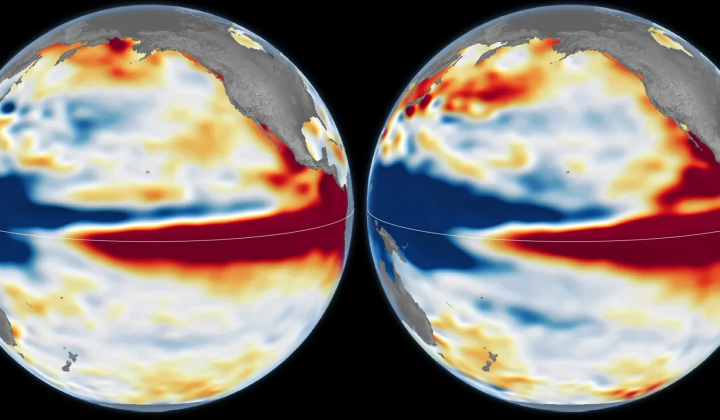
According to НВ — Техно: NASA has flagged the development of an exceptionally strong El Niño event anticipated to peak during 2026–2027, potentially surpassing the historic 1997–1998 episode. Observations from October 2026 revealed elevated sea levels in the central and eastern equatorial Pacific Ocean-an early indicator of El Niño. According to NOAA forecasts, there is an 83% chance that a strong to very strong El Niño will form in the first quarter of 2027.
How El Niño Shapes Global Weather Patterns
El Niño occurs when surface temperatures in the central and eastern equatorial Pacific Ocean rise above average levels. This phenomenon typically emerges every 2 to 7 years, disrupting atmospheric circulation and triggering widespread climate impacts worldwide. Notable strong El Niño events, such as those in 1997–1998 and 2015–2016, have been linked to severe droughts, crop failures, and wildfires in Indonesia and the Amazon, alongside intense rainfall and flooding in coastal California.
Data from October 2026 shows the warm water distribution in the Pacific closely resembles the pattern seen in 1997, but the current event is developing at a faster pace. Normally, trade winds push warm surface waters westward; however, when these winds weaken, warm water shifts eastward, raising ocean temperatures and sea levels near South America. The 2015–2016 El Niño differed in water movement, which concentrated heavy rains over Central America and the southeastern United States.
It remains uncertain which specific regions will experience the most significant weather disruptions.
Josh Willis emphasizes that this upcoming El Niño could exceed previous records in scale.
Given these evolving trends, heightened vigilance and preparedness are essential to cope with the potential effects of this powerful climate event.
NASA’s warning about a potentially intense El Niño carries global importance, as the phenomenon can impact food security, economies, and ecosystems across many nations. Regions already vulnerable due to climate change may face heightened risks, underscoring the critical need for ongoing monitoring and readiness to address possible environmental and humanitarian crises.
The implications of this record-breaking El Niño extend beyond immediate weather patterns. For instance, the unprecedented warmth in Monterey Bay during the same period is already transforming its ecosystem. Understanding these changes is crucial for anticipating future environmental impacts. To learn more about how this event is affecting local marine life, visit Monterey Bay’s ecosystem changes.

Read also