Why a Single Strike Won't Destroy Russian Industrial Targets, According to an Expert


Analyzing the Perception of Strikes on Russian Territory
According to ХВИЛЯ: Political expert Yuriy Romanenko examines how strikes on targets within the Russian Federation, such as the Votkinsk Plant, are perceived. He stresses that expecting a single attack to obliterate a factory is unrealistic, as the actual results are often less dramatic than public sentiment suggests. Romanenko draws a parallel between modern warfare and a game of chess played in a dark room, highlighting the necessity of manipulating the enemy's perception of reality.
The expert notes that many people celebrate news of strikes on Russian facilities, believing it will lead to the swift collapse of the adversary's economy. However, Romanenko points out that new photos or videos often emerge days later showing that while damaged, the plant remains largely functional. This is a common feature of modern hybrid warfare, where information and physical effects are deeply intertwined.
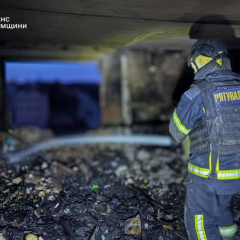
People sit and rejoice: 'Oh, that's it for them! Tomorrow they'll run out of missiles, tomorrow they'll stop pumping gas!' And then two days later, some photos or videos appear where you can see that-yes, they hit it, yes, it's burning, but the plant is standing, and the workshops are more or less intact. Yuriy Romanenko
Romanenko focuses on the concept of 'critical damage,' explaining that even if a factory appears intact externally, key components may be damaged, severely hampering operations. For instance, he states: 'This could mean a unique electrical substation is knocked out, one that can't be replaced in a month. Or a specialized machine tool, imported through three borders via gray channels, is damaged. From the outside, the plant might look whole, but it's at a standstill.' Thus, critical damage involves not just physical destruction but the crippling of production capacity.
The Crucial Role of Information Warfare
The expert also underscores the vital importance of information operations in contemporary conflict. He argues against providing the enemy with clear details about an attack's success, advocating instead for manipulating their understanding of the situation.
Why tell the enemy: 'We hit this specific transformer, and now we know you're shut down'? No! You need to speak in maximally vague terms or, conversely, exaggerate in the other direction. Yuriy Romanenko
Concluding his analysis, the political expert urges careful consideration of official statements and learning to read between the lines. He remarks: 'If the GUR [Main Intelligence Directorate] says the flamingos have flown, it means that's what the operation requires.' This part of an information operation, he says, is meant to force the enemy into miscalculation, a key element in modern military conflicts where perception is a decisive battlefield.
Romanenko's analysis highlights the complexity of interpreting military actions and their consequences, as well as the strategic significance of information management in modern warfare. In a conflict where every strike can influence morale and economic resilience, it is crucial not only to inflict physical damage but also to effectively control the narrative surrounding these actions, which can significantly impact the conflict's trajectory and the strategies of both sides.

Read also