Erdogan vs Israel: media escalation as a bargaining chip

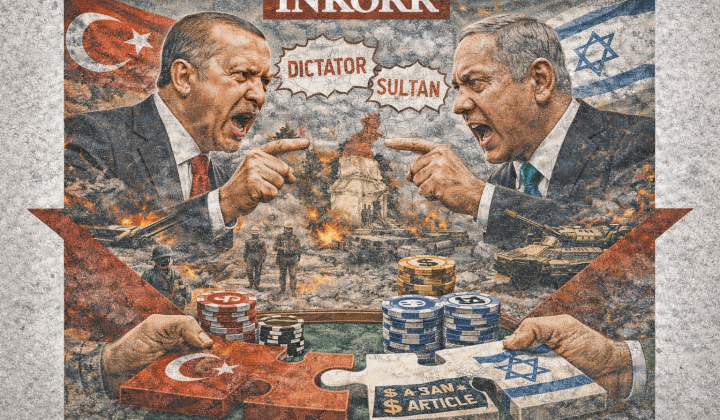
Recep Tayyip Erdogan threatened Israel with direct military intervention, following the scenarios in Libya and Karabakh. The formal trigger is the actions of Tel Aviv in Lebanon, where, according to the Turkish leader, 1.2 million people were forced to leave their homes despite the ceasefire regime. The response from the Israeli Cabinet was symmetrically harsh: the Turkish president was named a 'megalomaniac dictator,' imagining himself an Ottoman sultan amid the ruins of his own economy and dead democracy.
Media poker instead of real war
We are witnessing a session of geopolitical poker, where the stakes are raised exclusively in the media field. Erdogan's statements about military intervention are not operational directives to the General Staff, but a calibrated political technology.
Military physics: Israel is not Libya and not Karabakh
Firstly, military physics. Comparing the intervention in Libya or assistance in Karabakh (where Turkish drones and advisors operated against technologically inferior armies) with a potential strike on Israel is a geopolitical mistake. Direct aggression against Tel Aviv means an immediate confrontation with American carrier groups. Turkey, being a key flank of NATO, will not engage in such military suicide.
Internal contour: the economy as a pain point
Secondly, the internal contour. The Israeli minister struck at Ankara's main pain point-the economy. Chronic inflation and financial turmoil hit the ratings of the Turkish authorities much harder than Middle Eastern crises. Erdogan desperately needs to channel social discontent from the conservative electorate onto an external enemy. The image of the 'sole defender of the Islamic world' is the perfect lightning rod.
Diplomatic capitalization: the price of the threat
Thirdly, diplomatic capitalization. By escalating rhetoric to the absurd, Ankara inflates its value in future Middle Eastern settlements. Erdogan sells the threat of regional escalation in exchange for political concessions from Washington and Brussels.
Conclusion: a cynical symbiosis
The public exchange of insults will not lead to a real war between Turkey and Israel. For Ankara, this is an informational smokescreen, masking economic problems, and a tool for fighting for the status of the leader of the Sunni world.
For Israel, this diplomatic conflict is tactically beneficial: the crazy rhetoric of neighbors perfectly legitimizes the harsh cleaning operations of the IDF in Lebanon and Gaza before Western allies. This is a cynical political symbiosis where enemies solve their internal problems at each other's expense.

Read also