EU Adopts New Migration Strategy, Designating Russia and Belarus as Hostile States

Europe's Migration Crises and Russia's Role
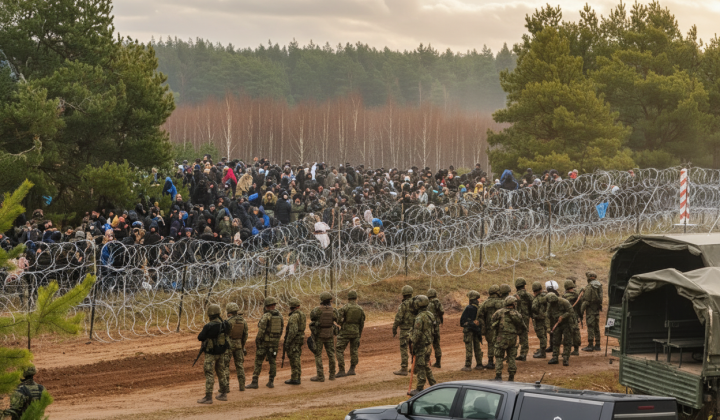
According to Главком: The EU's Center for Countering Disinformation reports that Russia is actively fostering migration crises in Europe. This assessment is supported by statements from EU Commissioner for Migration Magnus Brunner and an EU Council report, which details Russia's significant influence over illegal migration flows towards the EU's borders. New data indicates that a majority of illegal migrants enter the EU with direct assistance from Russia, including the issuance of Russian visas and the organized movement of people through Belarus to the borders of Poland, Lithuania, and Finland.
Russia has also been linked to major refugee waves stemming from the 2015 Syrian war, as well as the consequences of its invasion of Ukraine and conflict in Iran. The Center for Countering Disinformation emphasizes that
"The Kremlin deliberately prolongs armed conflicts in Africa and the Middle East, using migrants as a tool for hybrid warfare to drain Western budgets,"
according to the Center.
The European Union's Response
In response to these hybrid threats, the European Union has approved a new five-year strategy on migration and visa policy, which formally classifies Russia and Belarus as hostile states. As the Center for Countering Disinformation notes,
"artificial migration crises benefit Moscow by politically destabilizing Europe and influencing elections through boosting the ratings of radical parties."
By creating border tensions, the Kremlin aims to force the EU to shift its focus away from military support for Ukraine toward resolving internal security issues. This situation underscores the complex geopolitical dimension of migration policy, where humanitarian challenges are weaponized.
The EU's new strategy highlights the need for member states and neighboring countries to collaborate in countering such hybrid threats and securing their borders. It also points to the growing necessity for coordinated international action to address the intertwined issues of migration and security, which are now central to European stability.

Read also