ETH Zurich Develops Advanced ACP Control System Enabling Humanoid Robot G1 to Climb Ladders and Navigate Obstacles

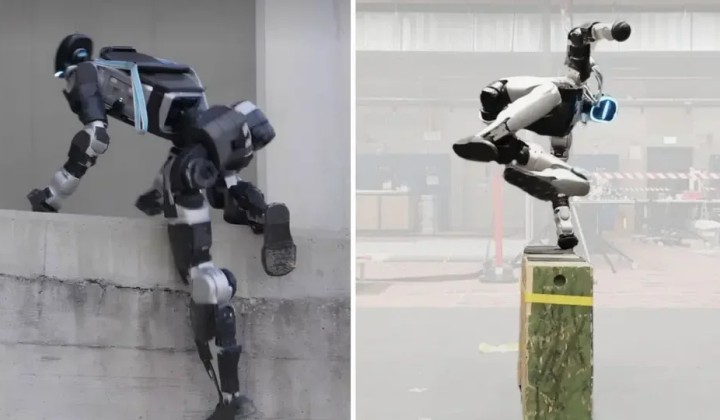
Breakthrough Control Technology Powers Humanoid Robot G1
According to НВ — Техно: Researchers at ETH Zurich have engineered an innovative control system for Unitree’s humanoid robot G1. This cutting-edge technology equips the robot with the ability to climb ladders, overcome various obstacles, and recover from falls. The core of this system, named Attention-based Contact Planning (ACP), manages contact points across nine critical body parts: both hands, elbows, knees, legs, and the pelvis.
Stepwise Training Process Behind ACP
The ACP system was developed through a rigorous three-phase training approach:
- The initial phase involved training a full-body controller using 13.2 minutes of human motion data.
- The second phase combined joint training of the contact planner and the controller.
- The final phase focused on adapting the system to procedurally generated environments through reinforcement learning.
Simulation tests demonstrated that ACP achieved an impressive 92.5% success rate navigating eight complex obstacle courses, outperforming the baseline MGMT controller, which reached only 58.8% success on the same challenges.
In parallel, researchers from the University of Illinois Urbana-Champaign introduced Contraction-Aware Reinforcement Learning (CARL), a method that improves robotic motion accuracy by 15%. CARL integrates reinforcement learning with mathematical stability control theory, enabling robots to refine their movements based on environmental feedback.
"The development of new control systems for humanoid robots highlights significant advancements in robotics." – ETH Zurich Researchers
Technologies like ACP and CARL hold promise across diverse applications, from delivery services to emergency rescue missions, where enhanced mobility and precision are crucial. These advancements underscore the vital role of interdisciplinary research in creating autonomous systems capable of operating effectively in challenging real-world conditions.
In a related development, researchers from the University of Illinois Urbana-Champaign have introduced a method that enhances robotic movement precision by 15%. This new approach integrates reinforcement learning with stability control, potentially complementing the advancements achieved with ETH Zurich's ACP system. Such innovations in robotics not only improve efficiency but also broaden the scope of applications in various fields.

Read also