Illinois Researchers Develop CARL Method to Boost Robot Movement Accuracy by 15%

Innovative Robot Training Technique Introduced
According to НВ — Техно: Scientists at the University of Illinois Urbana-Champaign have created a novel robotic training approach called Contraction-Aware Reinforcement Learning (CARL). This breakthrough enhances robot motion precision by 15% while maintaining stable and consistent trajectory tracking. By integrating reinforcement learning with contraction theory, CARL effectively improves performance across various operating conditions.
Reinforcement learning enables robots to refine their actions through feedback from their environment. Meanwhile, contraction theory provides a mathematical framework to assess and ensure system stability over time. CARL leverages these principles to mathematically limit deviations from intended paths, which is essential for achieving highly accurate robot movements.
Validation and Practical Applications
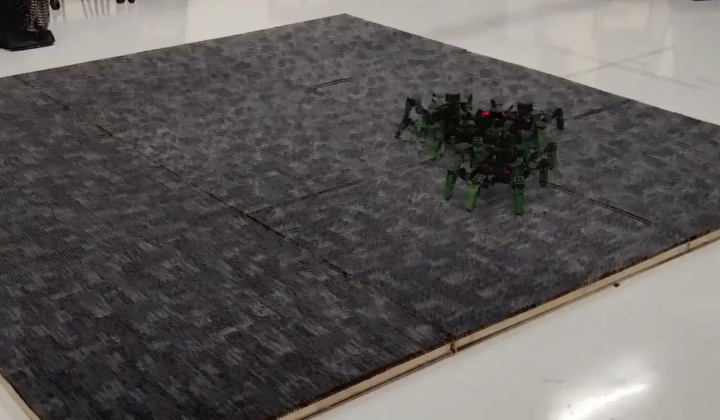
The CARL method was evaluated through both computer simulations and experiments with actual robotic platforms at an aerospace laboratory. Testing involved three distinct robots:
- The wheeled TurboBot 3 Burger,
- A flapping-wing aerial vehicle,
- The six-legged Jethexa robot.
Results demonstrated up to a 15% improvement in trajectory tracking accuracy compared to existing techniques, along with enhanced resilience to discrepancies between robot models and real-world behavior.
During training, the robot model used weighed 1 kg, whereas the real device weighed 1.2 kg. Despite this difference, CARL still delivered superior accuracy and stability. Potential uses for this technology include combating forest fires, detecting ignition sources, and supporting rescue teams by gathering data and transporting supplies.
These developments suggest CARL could play a pivotal role in advancing robotic capabilities for operations in hazardous environments.
By enabling robots to perform reliably under complex and dangerous conditions, CARL opens new avenues for improving the efficiency of emergency responses and other critical tasks. The implementation of such advanced control methods promises to enhance safety and operational speed during crises and paves the way for further innovations in robotics automation and artificial intelligence.

Read also