European Leaders Struggle to Agree on a Representative for Russia-Ukraine Peace Talks

Europe’s Role in the Russia-Ukraine Negotiations
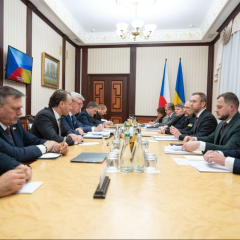
According to ХВИЛЯ: European leaders are eager to secure a seat at the negotiating table for the renewed Russia-Ukraine peace talks, brokered by the United States, yet remain divided over who should represent Europe. This issue was a key topic at the European Political Community summit held last Thursday in Dublin, where over 50 leaders gathered. Ukrainian President Volodymyr Zelensky and U.S. officials are pressing Europe to ensure its involvement in talks that have recently included meetings between U.S. special envoys and Russian officials in Moscow.
During the Dublin summit, EU leaders planned to continue discussions about Europe’s representation. Since the full-scale war began in 2022, Europe has struggled to establish a unified negotiation format, while some individual countries have started opening direct communication channels with Moscow. Slovenian Prime Minister Janez Janša admitted,
'This chaos is our own fault.' - Janez Janša, Prime Minister of Slovenia
Bulgarian Prime Minister Rumen Radev emphasized the urgency of Europe’s presence at the negotiating table, stating, 'Europe must fight harder to claim its rightful place.' Zelensky also stressed the importance of designating a European representative within this month: 'We are awaiting further details, and Europe must watch closely. We need to ensure Europe becomes a permanent part of these talks.' Albanian Prime Minister Edi Rama criticized the decision to delegate diplomacy solely to the U.S. as a 'major mistake.'
Peace Initiatives and Diplomatic Efforts
Meanwhile, Germany, France, and the United Kingdom have launched their own peace initiatives, and European Council President António Costa engaged in exploratory talks in Moscow on behalf of the EU. Norway and Finland have established direct communication lines with Russian President Vladimir Putin. French President Emmanuel Macron highlighted the need to revive dialogue efforts with Russia, while German Chancellor Friedrich Merz remarked that 'there is growing recognition on the Russian side that Europe cannot be discussed without Europe’s involvement.'
Despite these efforts, Europe’s representation in the negotiations remains unresolved. EU leaders intend to address this critical matter again during a dedicated summit in Dublin on Friday. Merz warned that, 'the willingness to acknowledge Europe's role is increasing but could easily fade. The outcome depends on the negotiations in the coming days.'
The ongoing difficulty in defining Europe’s role amid the Russia-Ukraine peace talks underscores the complex nature of international diplomacy during wartime. European leaders recognize that their engagement could significantly influence the peace process, yet internal disagreements and competition over a unified representative complicate progress. This situation highlights the pressing need for stronger political unity and coordination in the EU’s foreign policy to prevent similar diplomatic fragmentation in the future.
As European leaders grapple with the complexities of representation in the ongoing peace negotiations, the call for a unified approach grows louder. This sentiment echoes the recent appeal from Italy for a cohesive EU stance and the appointment of a special envoy ahead of the Dublin summit. Understanding the dynamics of these discussions is crucial, as they could significantly influence Europe's role in the peace process. For more insights on this matter, you can read about Italy's push for a unified voice here.

Read also