Philosopher Datsiuk Challenges National Memory Institute's Constitutionality

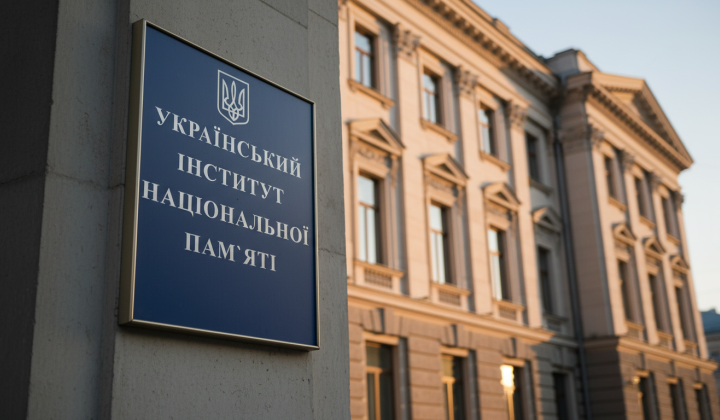
Critique of the Ukrainian Institute of National Memory's Activities
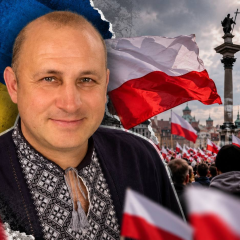
According to ХВИЛЯ: During an interview with political analyst Yuriy Romanenko, philosopher Serhiy Datsiuk raised concerns that the work of the Ukrainian Institute of National Memory (UINP) may violate Article 15 of the Ukrainian Constitution. Datsiuk argued that this article enshrines the principles of ideological diversity, a ban on censorship, and the prohibition of any state-mandated ideology. He questioned the legal basis for the institute's very existence in light of these constitutional guarantees.
History and Functions of the UINP
Datsiuk recounted the UINP's history, which began in 2006. He noted that from 2006 to 2010, it functioned as an overt propaganda institute, and later, during Viktor Yanukovych's presidency, it was temporarily converted into a research body. However, Datsiuk believes the institute's role changed fundamentally after 2014, marking a new phase in its operations. The UINP's work is particularly sensitive in a nation actively defending its sovereignty and historical narrative.
'Article Fifteen of the Constitution establishes three key principles: ideological diversity, a ban on censorship, and that no ideology can be mandated by the state. Excellent! But on what legislative, and primarily constitutional, grounds was the Institute of National Memory created?' - Serhiy Datsiuk
He further emphasized that the institute currently lacks a clearly defined legal status, which in his view points to its inherently propagandistic nature. 'No one specifies the institute's status; there is only the existing practice, which shows it is propagandistic. This is a direct violation of Article Fifteen,' the philosopher stated.
Datsiuk also observed that the UINP effectively acts as both the developer and executor of official historical policy, which he considers a 'concealed violation of the Constitution's fifteenth article.' He pointed to the problematic conflation of powers within a single body, raising serious questions about the legitimacy of its activities under current law.
The critical remarks from Serhiy Datsiuk cast doubt not only on the UINP's activities but also on the legality of its existence within the framework of constitutional norms. This critique may fuel further debate about the role of state institutions in shaping historical memory and their compliance with principles of ideological pluralism. Such discussions are vital for Ukraine's democratic development, as they touch upon fundamental citizen rights and freedoms concerning ideology and historical interpretation.
In light of Datsiuk's critique of the Ukrainian Institute of National Memory, it is essential to consider other areas where state actions may conflict with constitutional principles. For instance, the philosopher has also addressed the legality of sanctions imposed by the National Security and Defense Council of Ukraine, raising similar concerns about adherence to constitutional norms. To explore his insights on this matter, read more about his views on the legality of sanctions by the Security Council.

Read also