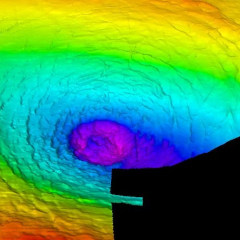
Unveiling Magnetar Formation from Neutron Star Mergers via FUGAKU Supercomputer Simulations

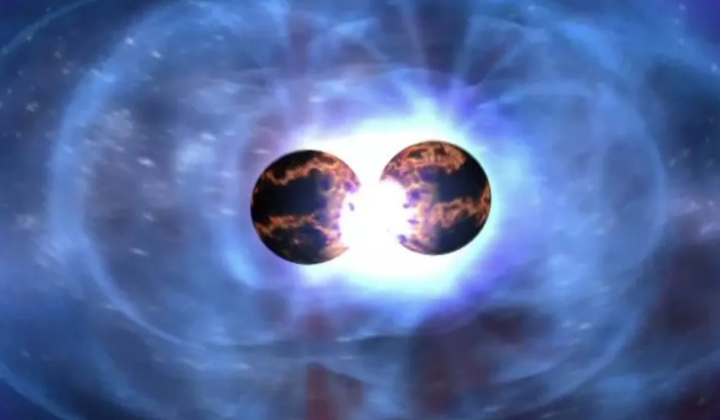
A Millisecond to Catastrophe
According to НВ — Техно: Scientists have shed light on the intricate events unfolding during the collision of neutron stars. Utilizing Japan's powerful FUGAKU supercomputer, researchers simulated the merger of binary neutron stars whose combined mass is below the Oppenheimer–Volkoff limit. This cosmic collision results in the birth of a magnetar, a neutron star with a magnetic field up to 100,000 times stronger than anything achievable in Earth-based laboratories.
Revealing New Physical Mechanisms
The study uncovered that the magnetic field of the newborn magnetar can intensify by over 300 times within just one millisecond. This rapid amplification is driven by the Kelvin–Helmholtz instability, which generates turbulence in the star’s matter. Approximately 1% of all neutron stars are magnetars, distinguished by magnetic fields roughly a thousand times stronger than typical neutron stars.
If the total mass of merging neutron stars exceeds about 2.6 times the mass of the Sun, the result is a black hole. However, when their combined mass remains below the Oppenheimer–Volkoff threshold, a massive neutron star is formed instead. In the simulations run on FUGAKU, each neutron star started with an initial magnetic field strength of 3 trillion gauss, an extraordinarily high value.
This breakthrough offers critical insights into the physical dynamics during neutron star collisions and their role in magnetar creation. Magnetars are believed to be the sources behind mysterious fast radio bursts and intense gamma-ray flares, making these findings highly significant for astrophysics and space science.
The FUGAKU supercomputer has opened new avenues for understanding the complex phenomena occurring in neutron star mergers.
Given magnetars’ connection to major astronomical phenomena such as gamma-ray bursts, these results have profound implications for future cosmic observations and stellar evolution theories. Moreover, this research highlights the transformative power of advanced computational technology in expanding our comprehension of the universe.
In light of these findings, the connection between neutron star mergers and the formation of magnetars becomes even more compelling. Recent reports highlight a nearly 10-minute X-ray flare that provides additional evidence of magnetar emergence following such cosmic events. This correlation underscores the importance of studying neutron star interactions further, as detailed in the related article on X-ray signals linked to magnetar birth.

Read also