Pharma Giant and NVIDIA Join Forces to Build the Most Powerful AI Supercomputer Yet

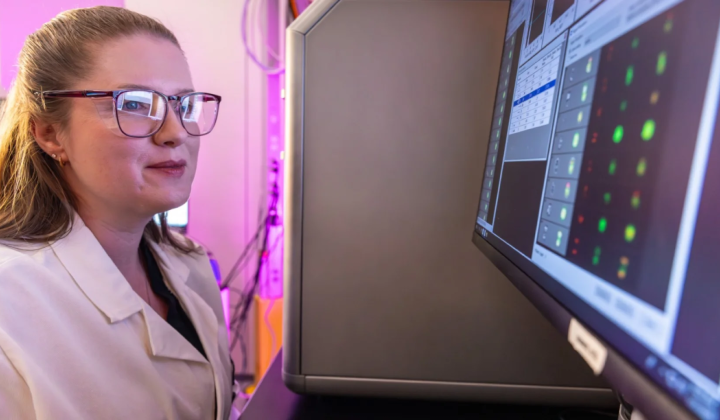
Bristol Myers Squibb and NVIDIA: A Game-Changing Collaboration
According to НВ — Техно: July 21, 10:00 PM
U.S. pharmaceutical leader Bristol Myers Squibb (BMS) is teaming up with chipmaker NVIDIA to construct the most advanced AI supercomputer ever seen in the pharmaceutical sector. This cutting-edge cluster is slated to go live in January 2027 and will be housed by data center operator Equinix. For context, this move comes as the industry increasingly turns to artificial intelligence to streamline drug discovery and cut costs.
BMS researchers will gain access to NVIDIA’s BioNeMo Agent Toolkit, a suite designed to significantly accelerate the development of new medications. Internal calculations at BMS revealed that relying on rented computing power only provided chips three to four generations behind the latest technology. Moreover, leasing turned out to be more expensive than directly purchasing processors from NVIDIA, making a strong business case for building their own supercomputer.
Shifting Trends in the Pharmaceutical Industry
BMS has been collaborating with NVIDIA for three years now. According to Greg Myers, the company’s Chief Digital and Technology Officer,
“BMS made a deliberate bet on AI, and we are beginning to see that bet pay off across our development portfolio and operations.”
It’s worth noting that other major pharmaceutical firms are following a similar path. Eli Lilly and Roche, for instance, secured their own dedicated hardware in October 2025 and March 2026, respectively.
The push for supercomputing power in pharma is clearly accelerating, and projects like the BMS-NVIDIA initiative could reshape the future of drug development. By investing in proprietary infrastructure, companies stand to not only reduce expenses but also speed up research and development, potentially bringing new therapies to market faster than ever before.
This trend underscores the growing importance of artificial intelligence in medicine and pharmaceuticals, promising to transform how diseases are treated and prevented.
The advancements in chip technology are pivotal for the evolution of AI applications in various sectors. For instance, IBM recently introduced a groundbreaking 0.7nm chip boasting nearly 100 billion transistors, showcasing the competitive landscape in computing power. This trend underscores the necessity for companies like BMS to invest in state-of-the-art infrastructure to maintain a competitive edge in drug development.

Read also