Ancient DNA Analysis Over 30,000 Years Old Reveals New Insights into Prehistoric European Migration and Connections

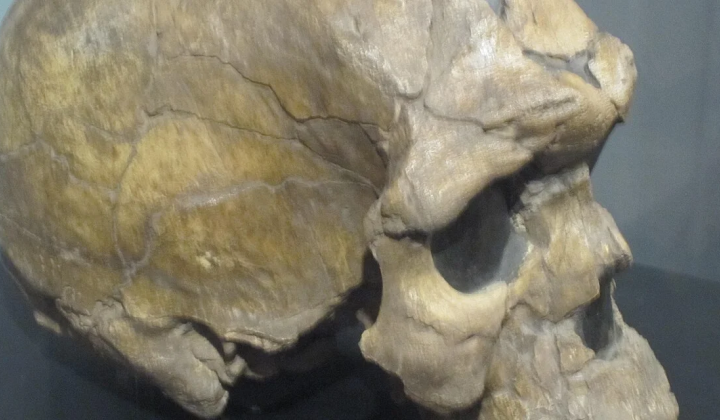
Exploring Ancient DNA Across Europe
According to НВ — Техно: An international team of researchers has analyzed DNA dating back more than 30,000 years, challenging previous views of Eastern and Western Europe as isolated during the Ice Age. Focusing on the Gravettian culture, which dominated Europe between approximately 34,000 and 25,000 years ago, the study uncovered genetic links between diverse European regions. Central to this research are samples taken from the Isturitz cave in southwestern France, dating to roughly 30,000 years ago.
The findings indicate that populations interbred around 32,500 to 31,500 years ago. Isturitz cave emerged as a hub for ancient migrants carrying a distinct mix of Western, Central, and Eastern European genetic markers. DNA extracted from the Chufín cave in northern Spain revealed a continuous presence of local Western European lineages spanning thousands of years. Additionally, nuclear DNA was retrieved from sediment layers at El Mirón cave in Cantabria, dated to about 22,000 years ago, despite the absence of human bones or teeth there. The study highlights the Iberian Peninsula as a refuge during the Last Glacial Maximum.
Genetic Relationships Among Ancient Populations
The remains of a boy known as Ostuni1b from southern Italy show that his parents belonged to the same genetic population but were not close relatives. This evidence supports the existence of intricate genetic networks among prehistoric humans. Researcher Pere Gelabert commented,
“This extensive gene flow broadens our understanding of the social dynamics within Gravettian communities.”
The team also plans to integrate sediment analysis with proteomics to investigate interactions between early humans and predators. As Ron Pinhasi explained,
“This approach helps fill in gaps where organic remains have not survived.”
These results have the potential to reshape our comprehension of demographic patterns in prehistoric Europe, revealing a mixture of local population stability alongside widespread migration events.
Beyond emphasizing the critical role of genetic research in unraveling human history, these discoveries open new avenues for understanding social organization and interactions among ancient populations. The findings carry significant implications for future studies on human community evolution amid climate shifts and migration, and they contribute valuable perspectives to ongoing debates about the origins and development of European peoples.
Understanding the genetic dynamics of ancient populations sheds light on the broader patterns of human evolution. In a related study, researchers have explored how external events, like asteroid impacts, have historically influenced species adaptation and evolution. Discover more about how such catastrophic events have shaped the evolution of various species, including ants, in this insightful article on a genetic revolution.

Read also