Ukraine's Military Intelligence Releases 3D Model of Russian 'Krasnopol' Guided Shell

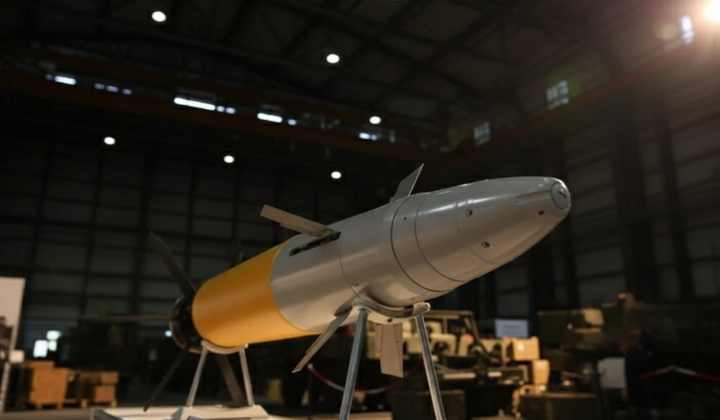
Details on the 'Krasnopol-M2' Munition
According to Главком: Ukraine's Defence Intelligence Directorate (GUR) has published detailed information on the Russian 'Krasnopol-M2' guided artillery shell. The data, presented as an interactive 3D model on the War&Sanctions portal, reveals the munition's specifications and its manufacturing network. The 'Krasnopol' is a 152mm guided high-explosive fragmentation projectile with a strike range exceeding 20 kilometers, representing a significant threat on the modern battlefield.
Development and Production Chain
The primary developer and manufacturer of the 'Krasnopol-M2' is the Tula-based Instrument Design Bureau, named after Academician Shipunov. This entity is part of the 'High-Precision Complexes' holding within the state corporation Rostec. Production involves a network of 17 enterprises, five of which remain unsanctioned. As intelligence notes,
'five of them are still not under sanctions from any partner countries-despite their involvement in manufacturing key components, including elements of the guidance system, electric motors for steering gears, and fuses for the warhead.'
In early April 2026, Russian structures publicly reported the delivery of a batch of these munitions. In the first three months of 2026 alone, Ukraine received over half of all the mines and shells supplied throughout the entire year of 2025. This data indicates the aggressor state Russia's continued supply of precision-guided munitions. According to the GUR, Russia
'continues to use high-precision munitions in the war against Ukraine, relying on access to technologies and components.'
The 'Krasnopol' munition is deployed from the 'Msta-S' and 'Akatsiya' self-propelled howitzers, as well as the towed 'Msta-B' and D-20 howitzers. Fire correction is provided by ground-based laser target designators or drones such as the 'Orlan-30' and 'Granat-4'. The Defence Intelligence Directorate is systematically exposing these supply chains and calling for increased sanctions pressure to deprive the aggressor of its capacity to wage war.
This disclosure underscores the critical importance of controlling the technologies used to produce precision munitions. It also highlights the necessity for enhanced international coordination in imposing sanctions on enterprises that continue to cooperate with Russia's military-industrial complex. Understanding the supply chains for such weapons is vital for degrading the military potential of the aggressor state.
As the conflict continues, Ukraine's military is not only focusing on countering threats like the acquisition of drone munitions and mines, which have already exceeded half of last year's total, but also on understanding the capabilities of Russian artillery systems. This comprehensive approach is crucial for enhancing defense strategies and ensuring operational readiness in the face of ongoing challenges.

Read also