Stuttgart Engineer Develops Atmospheric Plasma Thruster for Low Earth Orbit Satellites

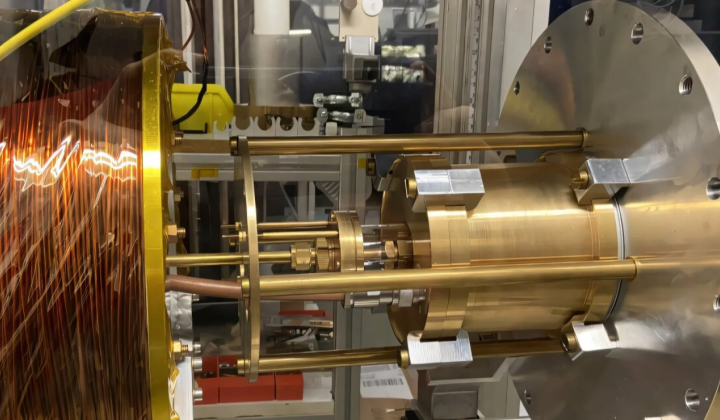
Fuel from the Air: Germany Unveils Plasma Engine Powered by Atmospheric Gases
According to НВ — Техно: Francesco Romano, an engineer at the University of Stuttgart, has pioneered a plasma propulsion system that operates using the thin air found in the upper atmosphere. This breakthrough radio-frequency helicon thruster is designed specifically for satellites orbiting at very low Earth altitudes (VLEO), between 100 and 450 kilometers above the surface. By ionizing molecules directly from the surrounding atmosphere, the engine eliminates the need for costly onboard propellant tanks, enabling continuous thrust.
Satellites in VLEO face significant drag from residual atmospheric particles, requiring constant propulsion to maintain their orbits. Traditional ion engines typically rely on xenon gas as fuel, which adds weight and limits mission duration. In contrast, the new air-breathing electric propulsion (ABEP) system collects gas molecules ahead of the satellite, uses radio-frequency fields to ionize them, and expels a plasma jet to generate thrust. This approach dramatically reduces fuel consumption and simplifies engine design.
Overcoming Technical Obstacles
One of the main challenges was protecting engine components from atomic oxygen present at these altitudes, which can corrode metal electrodes and charge neutralizers. To address this, the engine features a fully contactless design that avoids direct material wear. Inspired by MRI technology, its coil includes a "birdcage" antenna, and the solenoid generates a magnetic nozzle that propels a quasi-neutral particle stream without relying on cathode guns.
Laboratory tests demonstrated plasma generation at power levels of 50-60 watts. The intake system, constructed with a parabolic mirror coated in graphite, successfully captured 94.3% of gas molecules even when the satellite’s trajectory deviated. Simulations based on the GOCE satellite’s orbit indicate that this propulsion method could maintain altitudes between 190 and 250 kilometers while consuming less than 1.6 kilowatts, supplied by solar panels.
Beyond Earth applications, this technology shows promise for Mars missions, where satellites could sustain orbits at 120 to 160 kilometers within the planet’s carbon dioxide-rich atmosphere. Romano’s development could revolutionize energy use in space exploration and enable longer-lasting, more efficient missions across the solar system.
The advent of an atmospheric plasma engine represents a major shift in how spacecraft can be powered, particularly by reducing dependence on stored fuel and enhancing satellite performance at low orbits. These advancements not only improve current satellite operations but also open new pathways for exploring other planets like Mars. As space missions face ongoing challenges, innovations like this are critical to extending mission lifespans and boosting efficiency in outer space.
As the aerospace industry continues to innovate, advancements in materials are equally crucial. A recent breakthrough in producing ultra-strong rocket composites promises to significantly reduce manufacturing time, enhancing efficiency and performance in satellite technology. This development complements the efforts in propulsion systems, showcasing how integrated advancements can propel space exploration forward.

Read also