California University Engineers Develop Laser Technique to Switch Magnetic States, Speeding Data Recording by 1000 Times

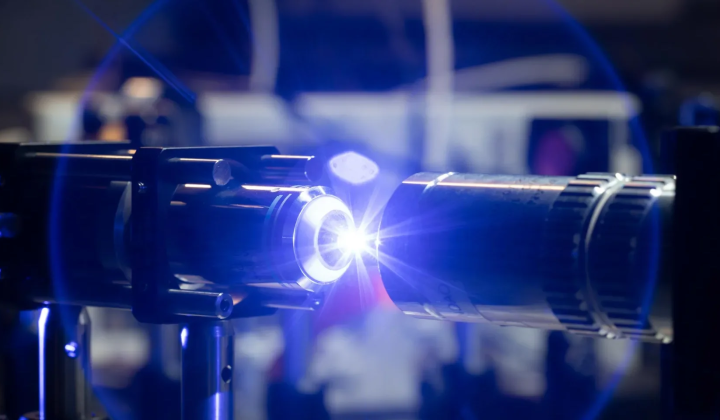
Innovative Laser-Driven Magnetic State Switching
According to НВ — Техно: Researchers at the University of California, San Diego, have introduced a groundbreaking laser-based method to rapidly switch the magnetic states of materials, boosting data recording speeds by a factor of 1000 and enhancing storage density. Their findings were published in the journal Nature Communications. Project leader Professor Abdoulaye Ndao emphasized that this approach enables switching within a thicker structure made of nine alternating layers of platinum and cobalt, without relying on light polarization-marking a significant advancement over previous techniques.
Benefits and Mechanism of the New Technology
Data storage today depends on tiny magnetic regions to encode information. Conventional magnetic switching methods typically require external magnetic fields, which complicates their practical application. This new technology employs ultrafast laser pulses concentrated on nanoscale areas, dramatically improving data writing efficiency. Earlier optical switching was limited to ultrathin materials no thicker than three atomic layers, restricting long-term data retention.
The method works by focusing light energy into a microscopic spot and delivering a sequence of ultra-short pulses. Initial pulses locally heat the material, altering its magnetic orientation, while subsequent pulses stabilize the new magnetic state. Looking ahead, the team aims to reduce the laser spot size to just a few hundred nanometers, potentially further enhancing performance. However, current ultrafast laser systems remain bulky and complex, posing challenges for integration into standard microchips.
Ongoing research is focused on refining material properties and optical configurations to pave the way for next-generation digital memory devices. These advancements hold promise for transforming data storage and processing technologies, crucial in an era of rapidly expanding information volumes.
Such improvements in storage technology could drive innovation across IT sectors, enabling more efficient handling of big data, artificial intelligence, and computer science applications. Nonetheless, additional investigation and development of compact, practical ultrafast laser systems are essential before this technology can be widely implemented.
In addition to advancements in data storage, researchers are exploring various applications of laser technology. For instance, a recent study from Berkeley has unveiled a laser phase plate designed to significantly enhance the contrast of microscope images. This innovation not only complements the progress in data recording techniques but also demonstrates the versatility of laser applications in scientific research. To learn more about this exciting development, visit the latest findings on laser-enhanced microscopy.

Read also