Ten times the strength of steel without the brittleness—engineers present new alloy

A novel approach to combining strength and ductility in an intermetallic compound
According to НВ — Техно: Researchers at Purdue University and the University of Houston have devised a way to make cobalt-aluminum (CoAl), an intermetallic compound, simultaneously ultra-strong and ductile. Their technique relies on magnetron sputtering and a framework made of amorphous interfaces. The resulting material reaches a yield strength of 6 GPa and can undergo up to 15% plastic deformation at room temperature. The findings appear in Science Advances. This breakthrough matters because strength and ductility are traditionally difficult to achieve together in a single material.
Research and findings
The underlying study was released on July 31. Intermetallic materials such as CoAl possess a highly ordered crystalline lattice, but before this work their severe room-temperature brittleness was a major obstacle. Magnetron sputtering-a non-equilibrium deposition process that builds material from a vapor phase-made it possible to deliberately seed CoAl with a high density of dislocations.
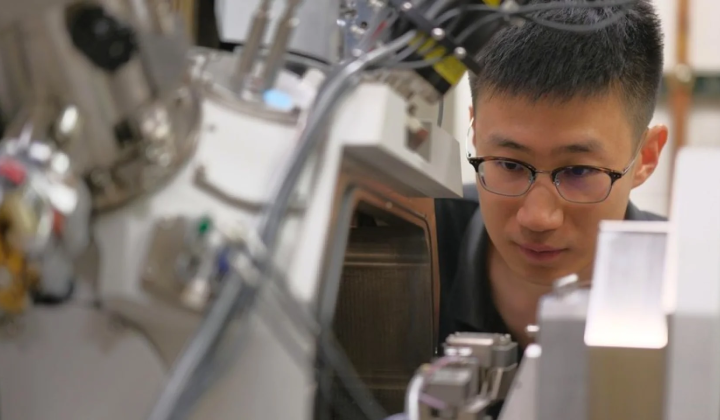
In addition, the team created a scaffold of amorphous interfaces, or FAI. When the material deforms, portions of these amorphous boundary regions partially crystallize, boosting its mechanical performance. The alloy's yield strength of 6 GPa is roughly 6–10 times higher than that of high-strength structural steel. Mechanical testing was performed inside a scanning electron microscope, and Purdue research scientist Ke Xu carried out in-situ nanomechanical experiments.
Possible uses include turbine blades and aircraft engine parts. The researchers also expect to test the method on other intermetallic systems, with the next step being scale-up to industrial production of bulk nanocomposites. Intermetallics like this new CoAl could find roles in aerospace, defense, and energy applications.
Stronger, more damage-tolerant materials can drive progress in industries such as aviation and energy generation. Intermetallic compounds like CoAl may alter how high-load components are designed and manufactured. Further research and scalable production could unlock new material-science innovations.
This advancement in cobalt-aluminum alloy technology is particularly significant in light of recent developments in materials science. For instance, researchers have recently unveiled an oxidation-resistant alloy that demonstrates remarkable strength enhancements in a remarkably short time. Such innovations highlight the ongoing efforts to create materials with superior mechanical properties, paving the way for more durable and efficient applications in various industries.

Read also