Historian Reveals the Only Scenario That Would Make Putin End the War

David Satter’s Take on the War in Ukraine
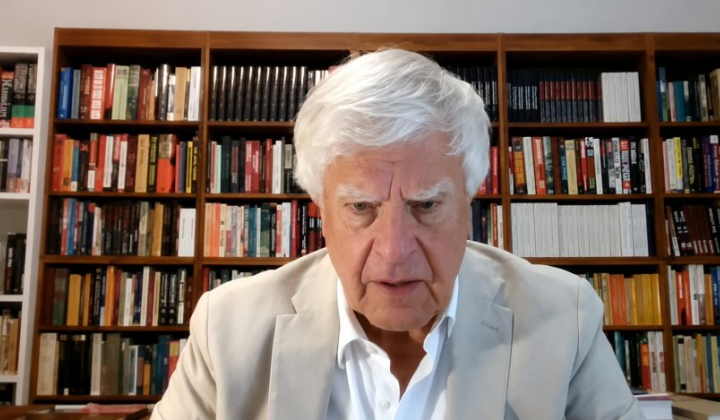
According to ХВИЛЯ: American journalist and historian David Satter argues that Russian President Vladimir Putin will only halt the war if he faces a direct personal threat. In an interview with the Silicon Curtain project, Satter commented on the situation in Ukraine, specifically addressing the Russian drone strike on the Dormition Cathedral of the Kyiv Pechersk Lavra on the night of June 15. He noted that this is not the first time the Lavra has been destroyed, pointing out that it was also blown up during World War II, and that the Bolsheviks had demolished Kyiv churches even earlier.
According to Satter, Putin’s inner circle, which is predominantly composed of security officials, is a sign of his weakness. He highlights the monthly decline in the number of people willing to sign contracts with the Russian army. Satter emphasizes that
“terror alone works only for a short time and certainly won’t make soldiers fight and die”
-he underscores this point.
Russia’s Internal Struggles and Western Strategy
David Satter believes that terror without ideology cannot endure. In his view, the Stalinist ideology that once organized and psychologically controlled the population is absent in modern Russia. He notes that
“you cannot be a deeply spiritual country where leaders convince the population that the highest moral duty is to strengthen the state’s power”
.
Satter identifies the loss of Crimea after a prolonged siege or the encirclement of 90,000 to 100,000 Russian troops near Zaporizhzhia as the main traps for Putin.
The journalist also stresses that the West has yet to define what victory means and is not preparing for Russia’s defeat. He considers it naive for some Western politicians to hope for a spontaneous uprising in Russia or for a “black swan” event that would solve the problem on behalf of the West. At the same time, Satter observes that Ukraine is moving toward the rule of law and universal values of the Western world.
David Satter’s conclusions reflect the complexity of the situation in Ukraine and Russia, highlighting the political and social dynamics influencing the course of the war. His analysis points to potential internal problems in Russia that could escalate the conflict, as well as the need for a clear Western strategy regarding victory over the aggressor. Satter indicates that achieving stability in the region requires considering not only military aspects but also ideological and social factors that could shape the war’s long-term consequences.
As Satter highlights the internal challenges facing Putin, it is crucial to understand the broader context of Western influence in this conflict. Experts suggest that the West possesses specific levers that could potentially sway the Kremlin's decisions. For a deeper analysis of how these factors play into the ongoing struggle, check out this article on the West's leverage over Putin.

Read also